For my work, I was provided with a massive block of Sardinian trachyte, a stone that immediately spoke to me through its texture, color, and geological history. Over the course of workdays, I created the sculpture BORA, named after the strong wind that is such a defining natural force across the Adriatic and Mediterranean regions.
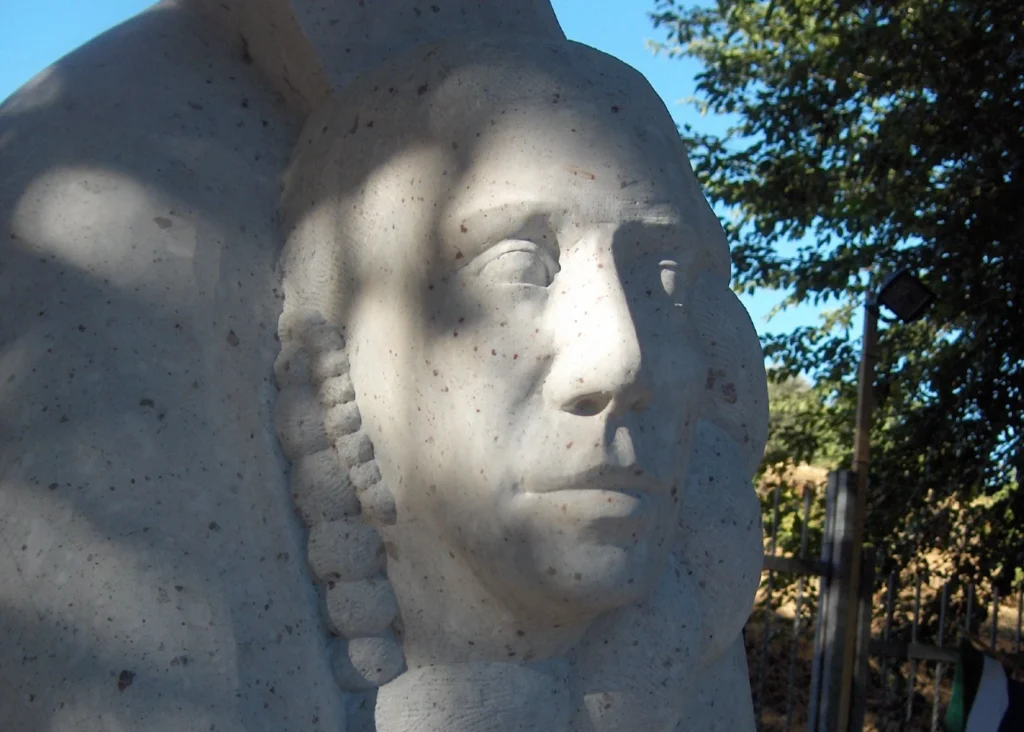
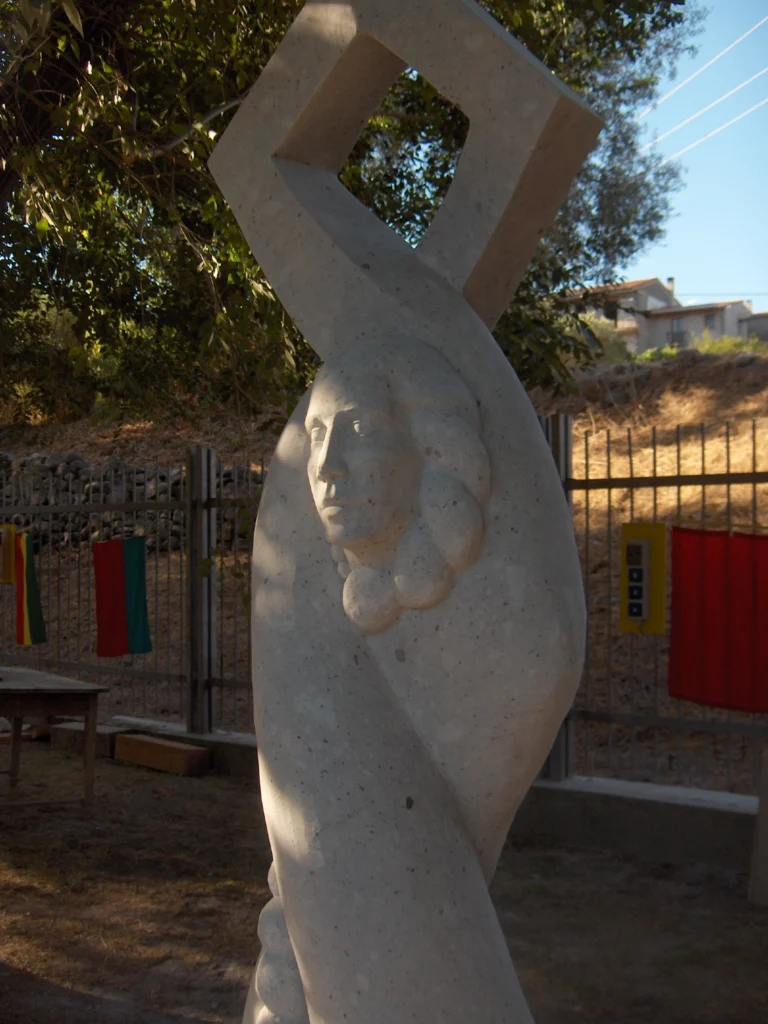
The sculpture stands 2.90 meters tall. It depicts a standing female figure whose body stretches upward in a subtle spiral motion. Particularly striking is the intricately braided hair, a long braid reaching down to her hips, that rhythmically follows the contour of the body. At the top, this braid merges into a geometric opening: a pierced square placed vertically.
This element can be seen as a symbolic opening to the sky, but also as a window for the Bora wind itself, an entry point for the invisible force that passes through the figure. The surface of the sculpture was deliberately left raw in parts, especially toward the base, while the face was finely carved. It has a calm, introspective expression, free from pathos, but radiating inner presence.
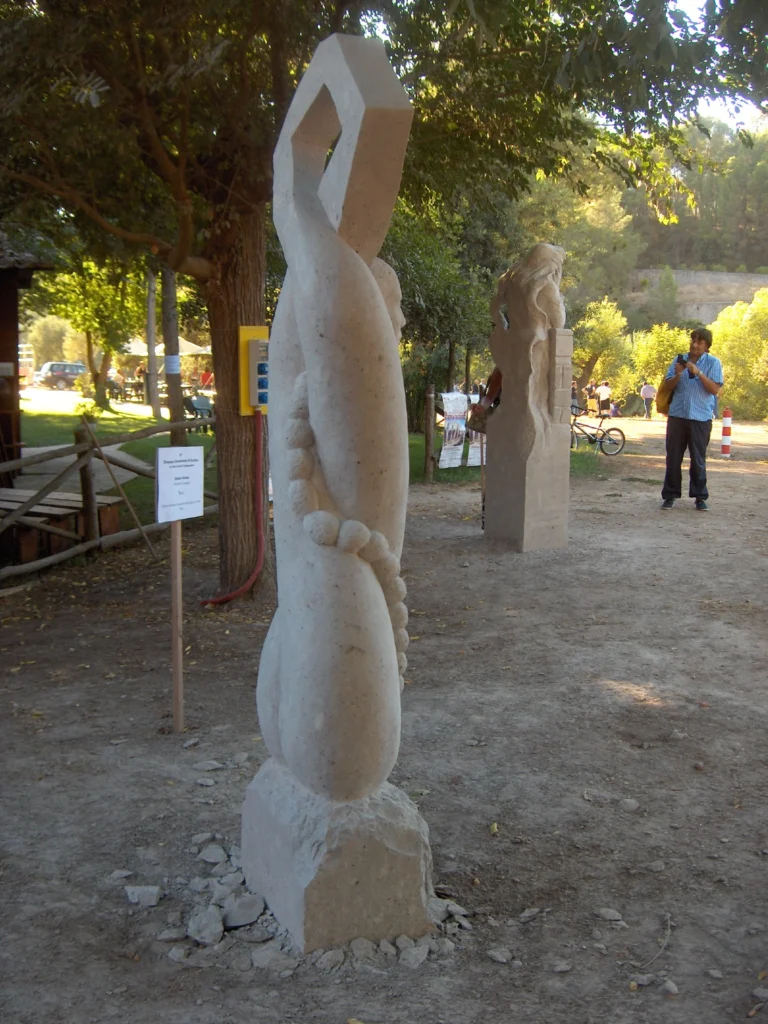
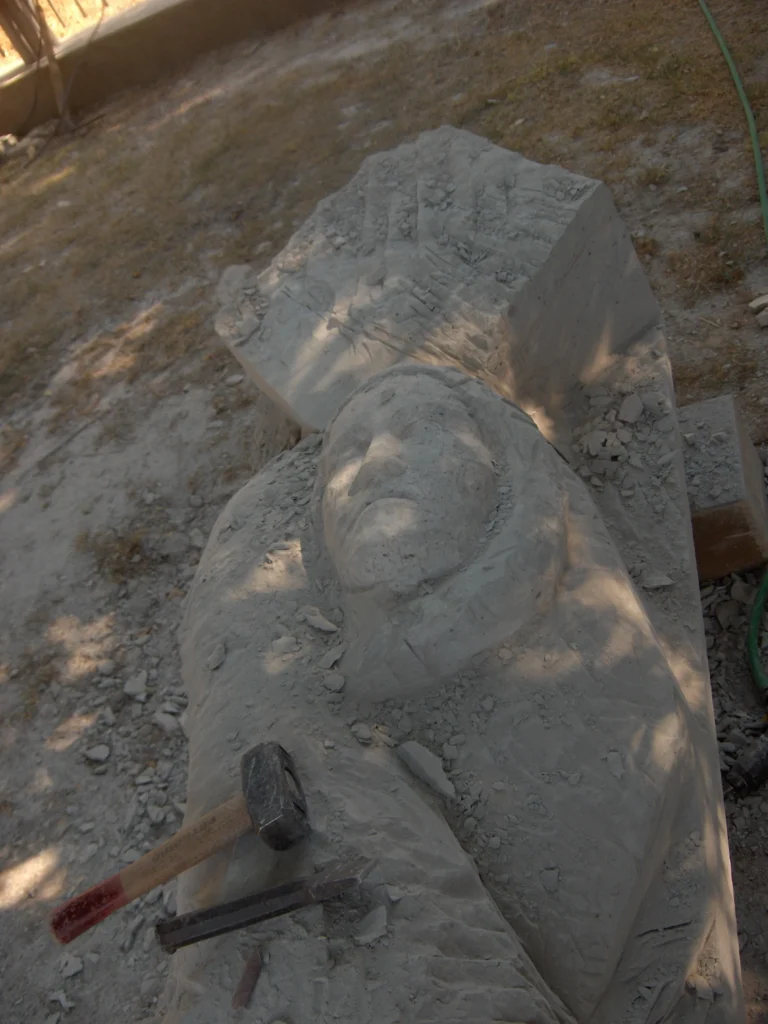
BORA is not a classical figurative representation in the academic sense. The body partly dissolves into movement, yet the face grounds the figure in a more tangible world. The motif of the siren, not as a seductress, but as a wind-being, accompanied me throughout the sculpting process. I was guided by the idea of an ancient sea creature singing with the wind and slowly taking form in stone.
The stonemason I worked with was a quiet, experienced man who used traditional tools and had deep knowledge of Sardinian trachyte. He showed me how to “listen” to the stone with hammer and pointed chisel, and how important it is to read the natural patterns of pores and inclusions before deciding where to strike. These kinds of craft based conversations (beyond spoken language) accompanied me throughout my work and had a lasting influence on my approach to the stone.
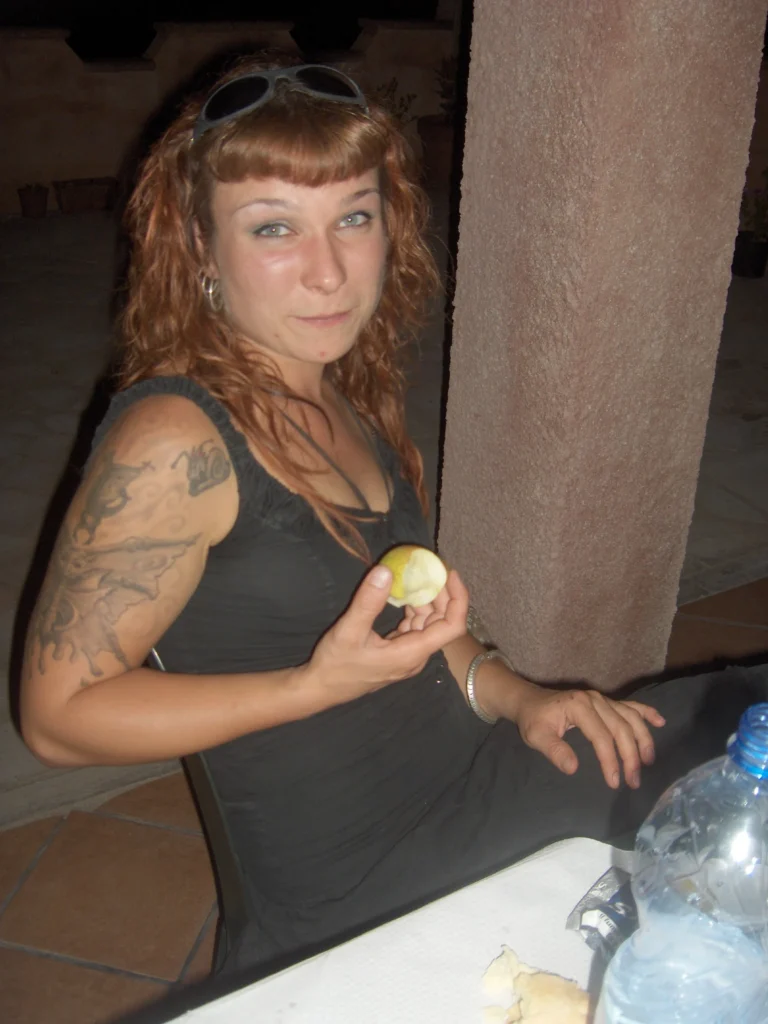
One of the highlights of my time in Fordongianus was the exchange with a local Sardinian stonemason whose workshop was located not far from the symposium grounds. Sardinia has a very long tradition of stoneworking, dating back to the time of the Nuraghi. Trachyte, of volcanic origin, has been used since antiquity in architecture, tombs, and sculpture. The Romans employed it in baths and aqueducts, and to this day, many historic buildings made of this material can be found across the island.
Outside of work, my stay on Sardinia was equally enriching. The people I met were open, curious, and proud of their culture. Through conversations, I learned a great deal about local customs and daily life, which balances between agriculture, fishing, ( beware of the siren) and traditional crafts. It wasn’t a tourist’s perspective, but a true immersion into a place that carries its history with dignity, without being weighed down by it. A proud people! I also had a wonderful time with my fellow sculptors, enjoying Sardinian specialties together. One person who especially stayed in my memory was Claudio,the carabiniere turned sculptor, who always introduced himself with an alias. Perhaps he was a little shy about his background, but honestly, we were all very kind souls.
I often think back to the symposium in Sardinia. And hopefully, I will have the chance to return there someday soon.
Fordongianus (Sardinia) 2008