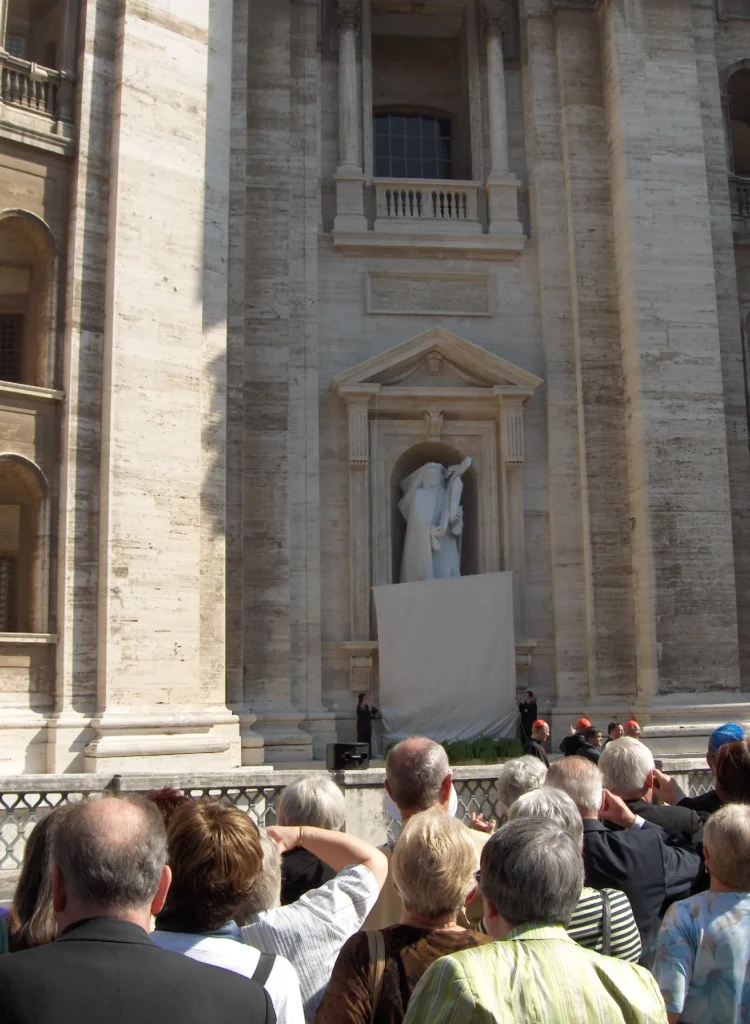
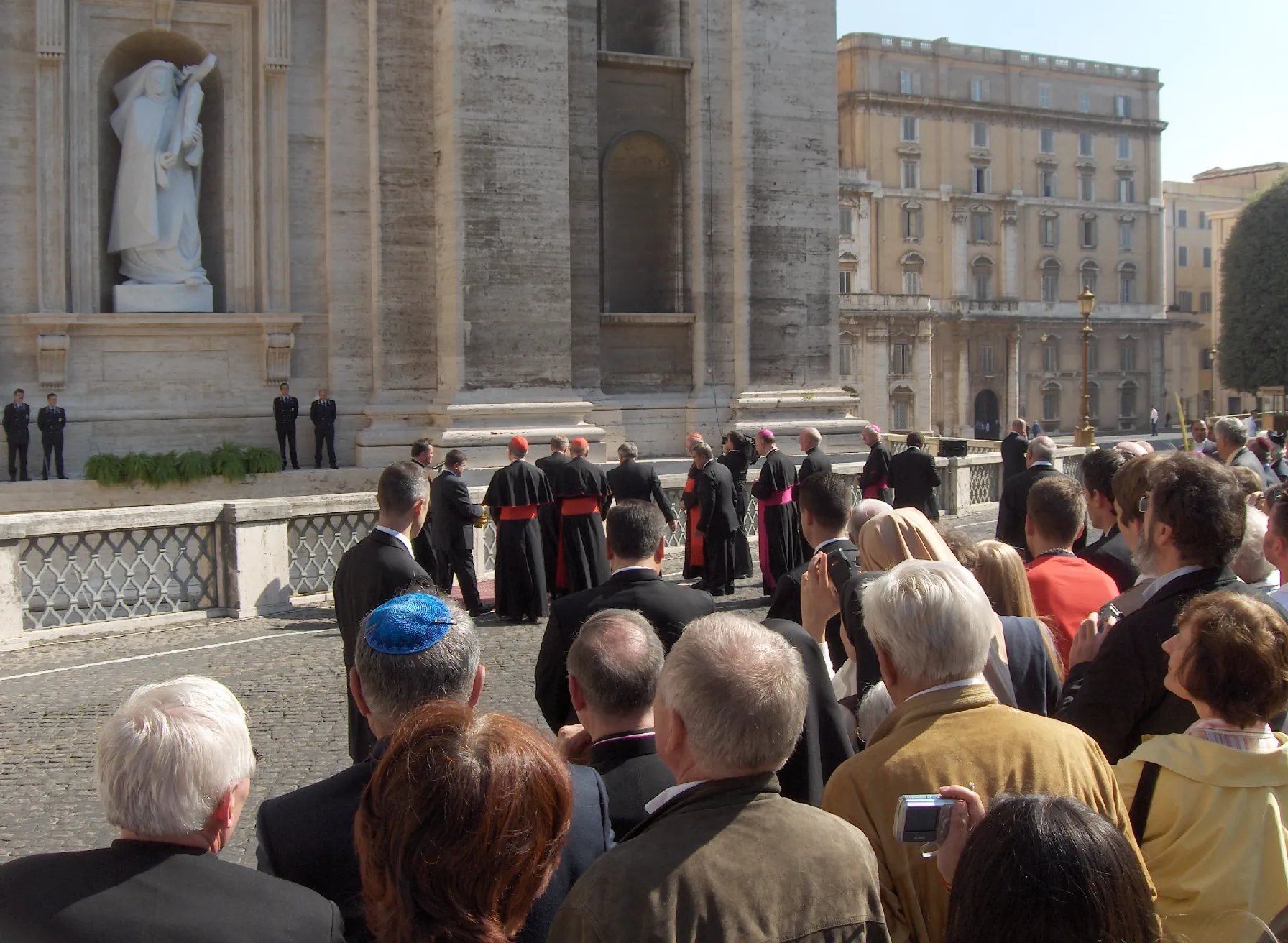
That year, I was invited by the German sculptor Paul Nagel to accompany him to the Vatican. The occasion was the final installation of his sculpture of Edith Stein, a work placed in one of the last remaining available corners of St Peter’s Basilica.
Paul and his wife had previously stayed as guests in our home, and deep conversations developed, which continued in Rome during the inauguration. There, together with our partners, we shared a hotel apartment during the days surrounding the ceremony.
The inauguration, attended by the Pope and high-ranking church officials, was, for me, a quiet yet deeply impressive moment.
To witness how contemporary sculpture finds its place within one of the most symbolically dense spaces of Western culture, neither prominent nor loud, but almost hidden (despite being a meter-high, fully sculptural, multi-ton marble statue) had a profound impact on my understanding of presence, humility, and duration.
Paul Nagel and I had met earlier in Carrara, at Studio Barattini, where I assisted him with smaller manual tasks. Our collaboration was marked by openness, mutual respect, and a shared understanding of material, precision, and responsibility toward the places where art becomes visible.
Jerusalem: Working at the Core of History
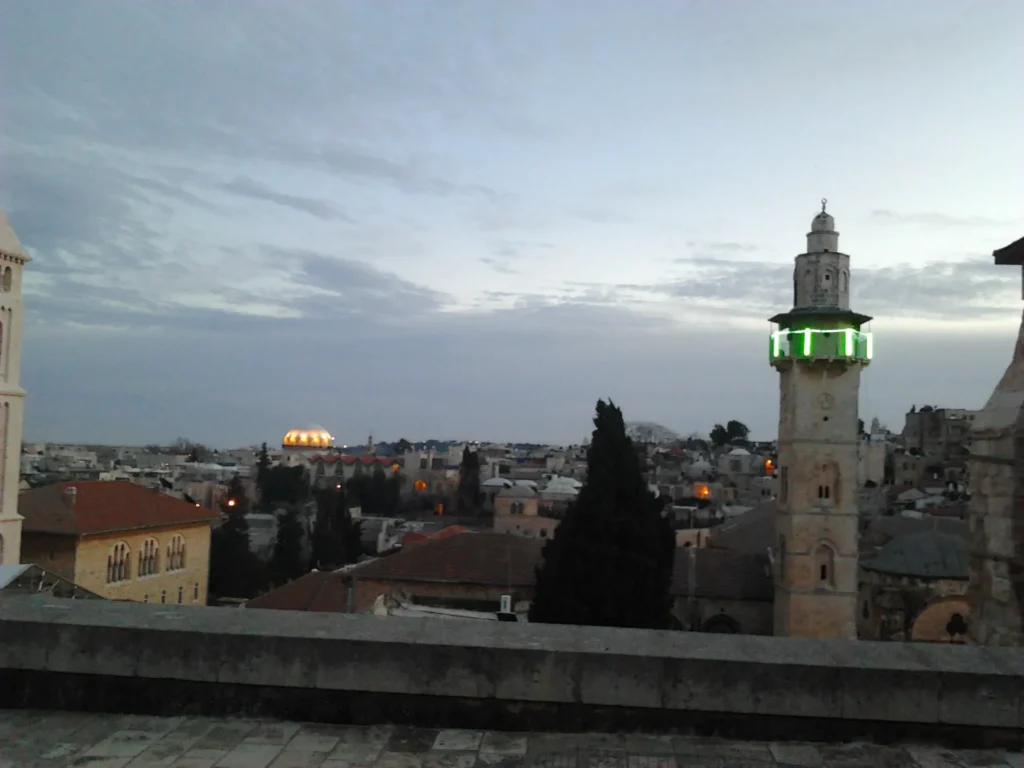
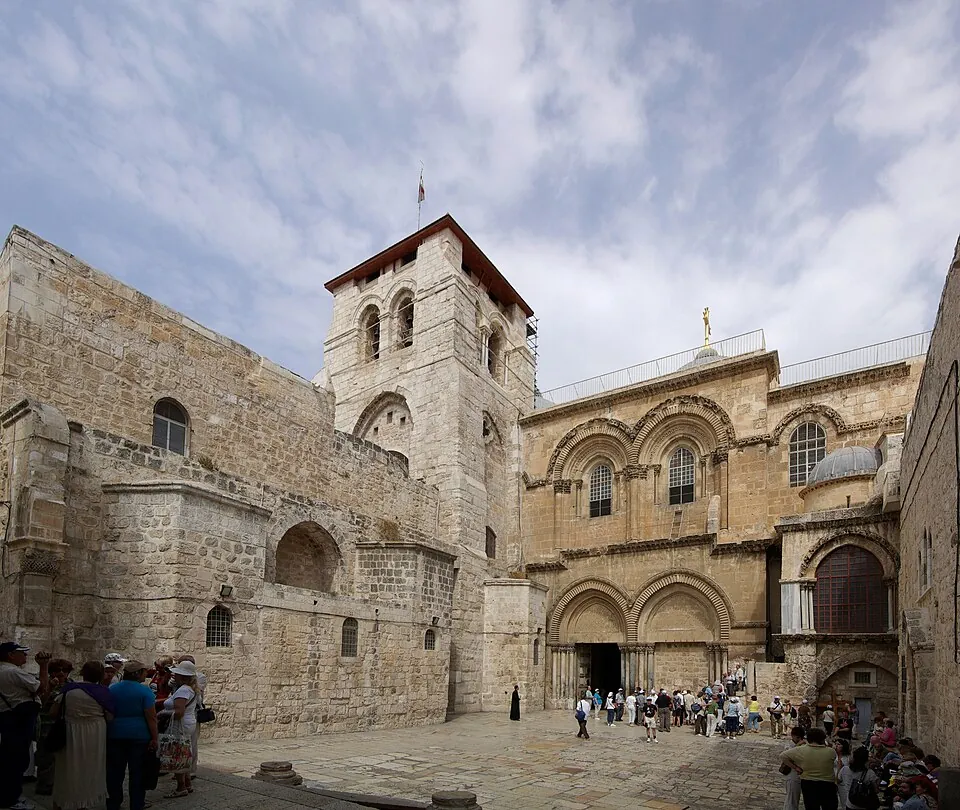
Between 2009 and 2012, several extended stays led me to Jerusalem, directly into the Church of the Holy Sepulchre in the Old City.
We were invited by the Greek Orthodox Church to carry out restoration work in the Chapel of Mary inside the church, an undertaking that officially did not exist and spread solely by word of mouth.
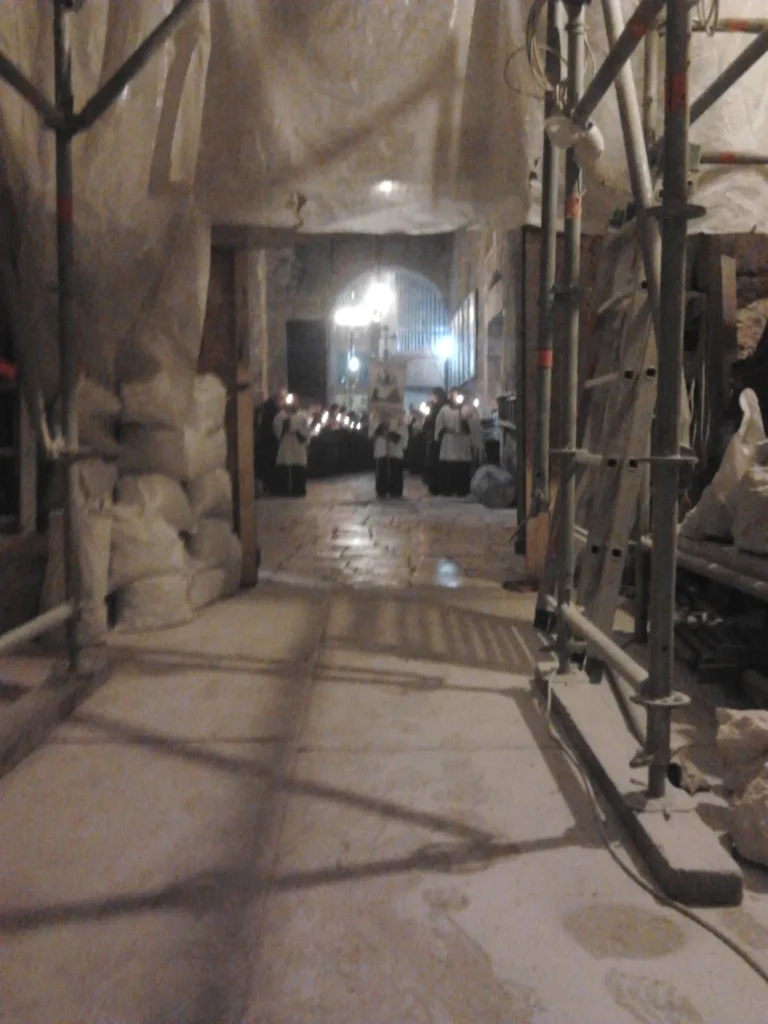
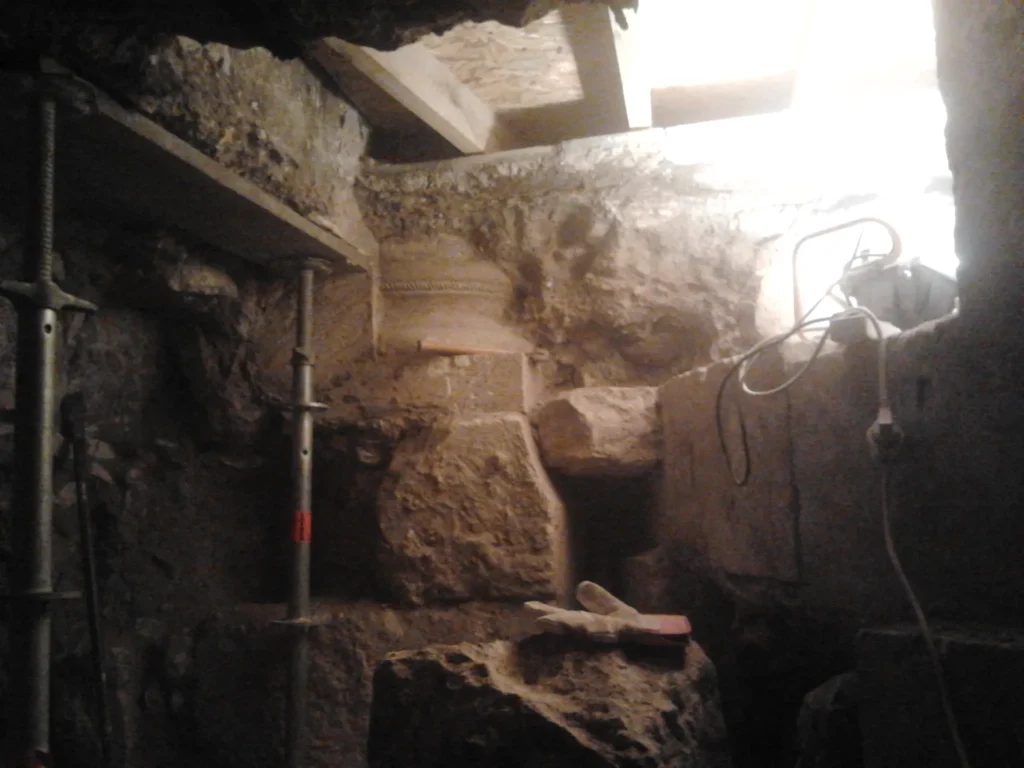
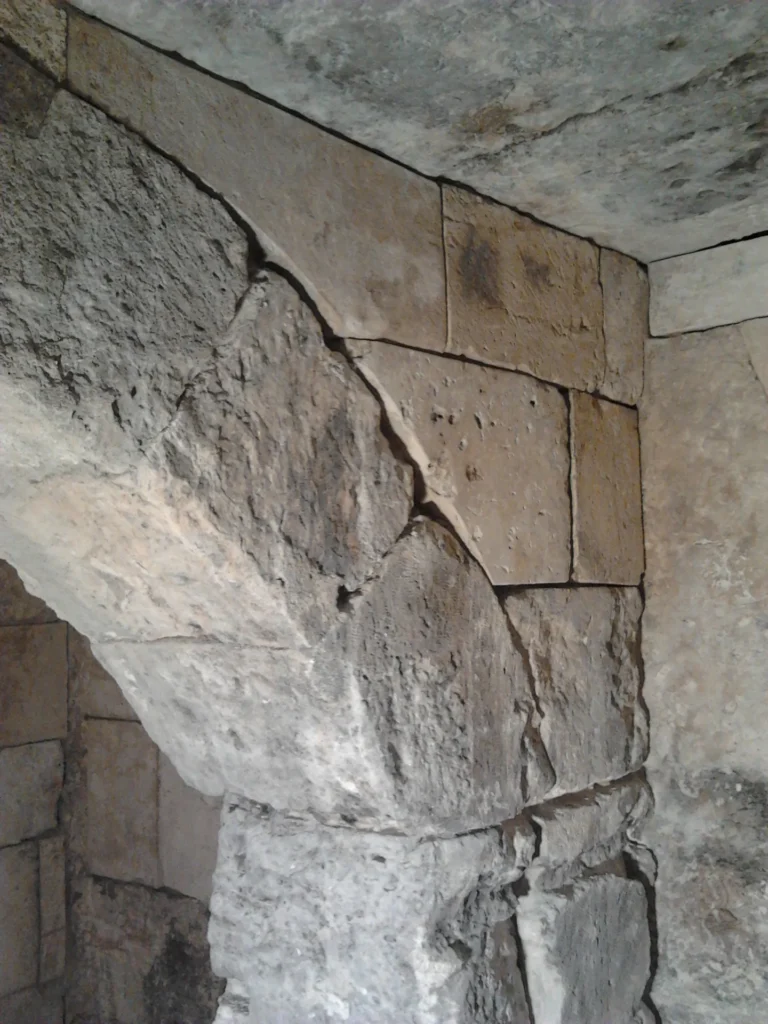
The Israeli authorities had not granted approval. As a result, the work took place incognito, without public visibility. Discrete, focused, undocumented, except, of course, for our own meticulous stone-by-stone documentation. I moved through the site disguised as a tourist.
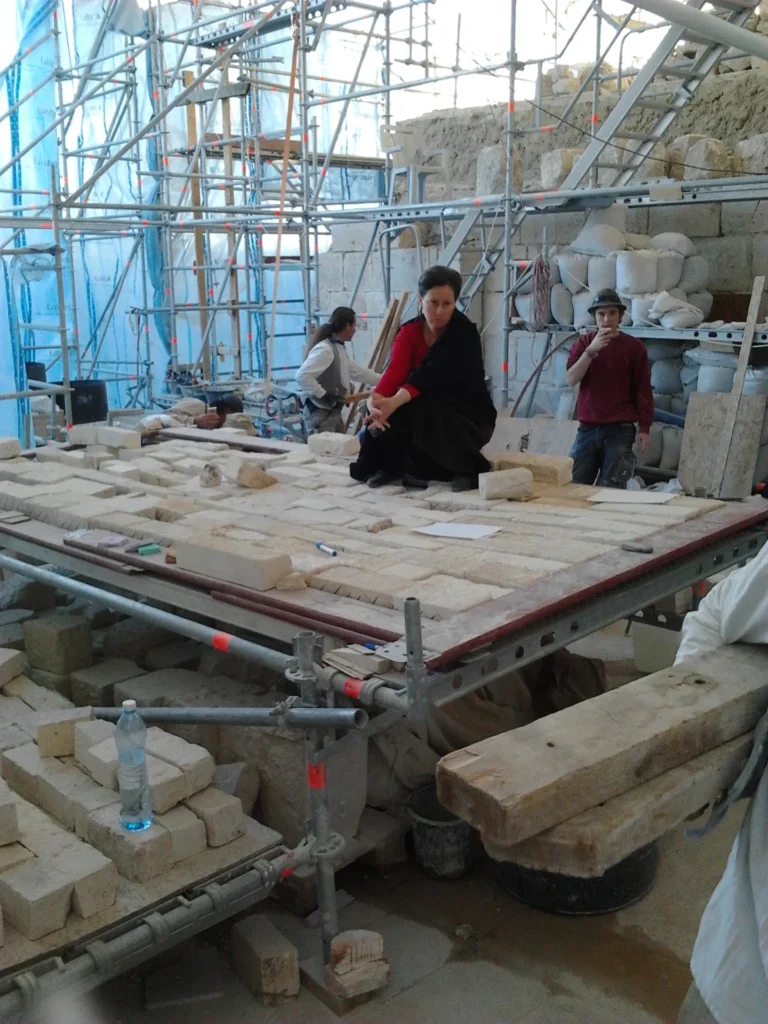
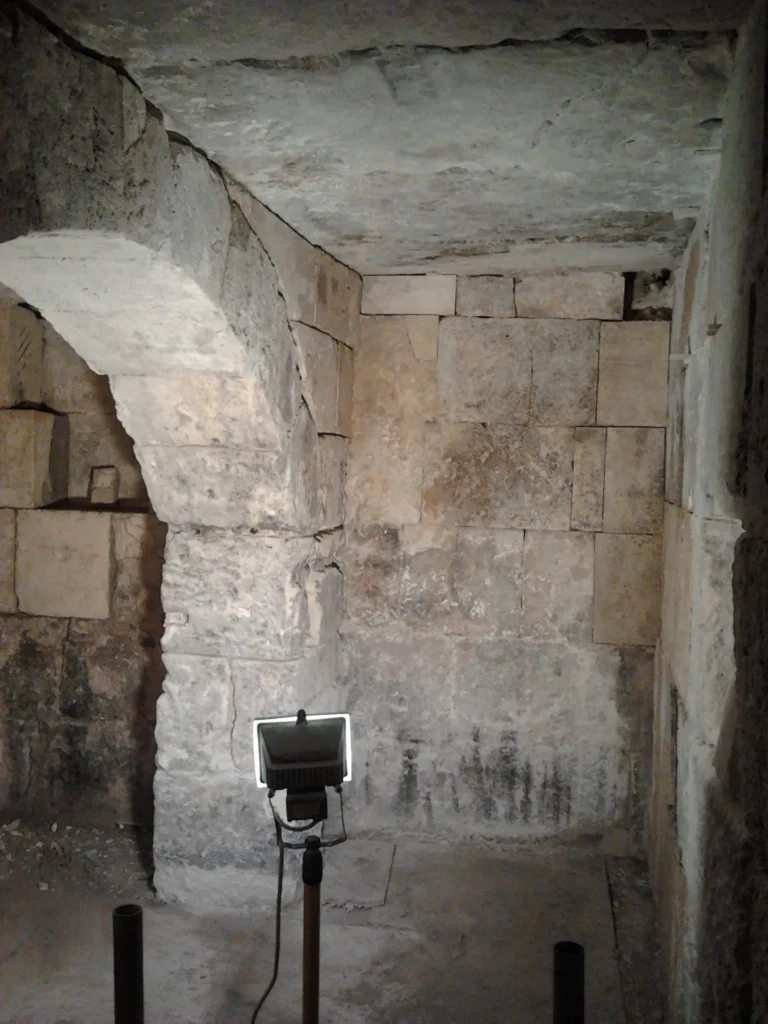
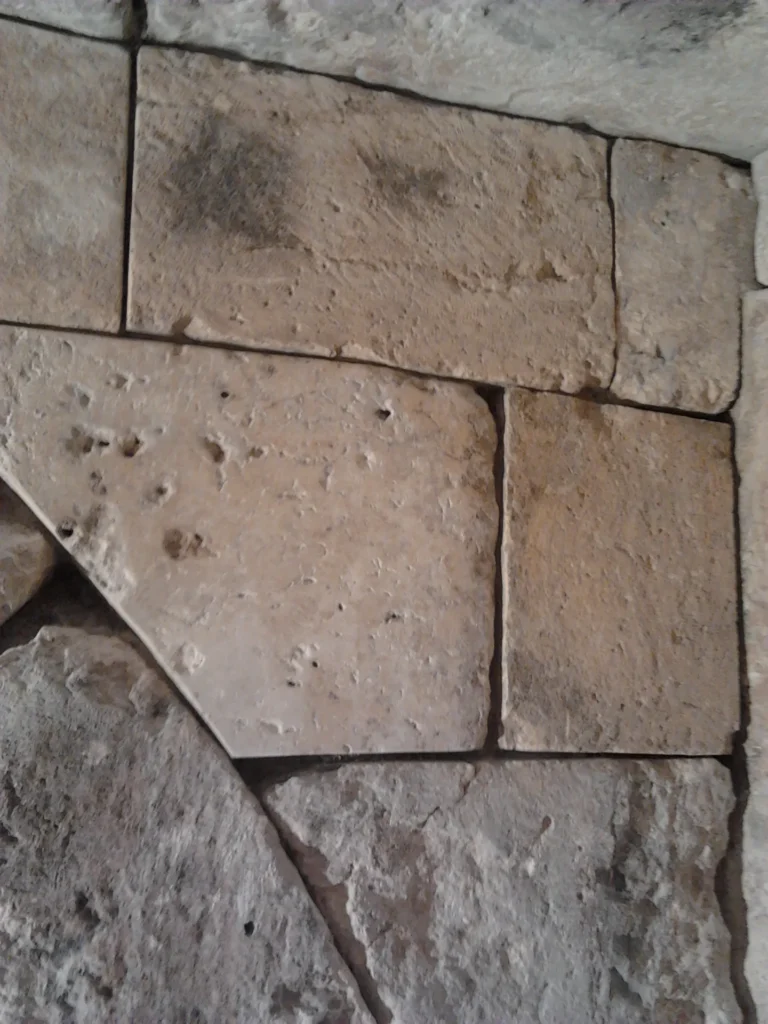
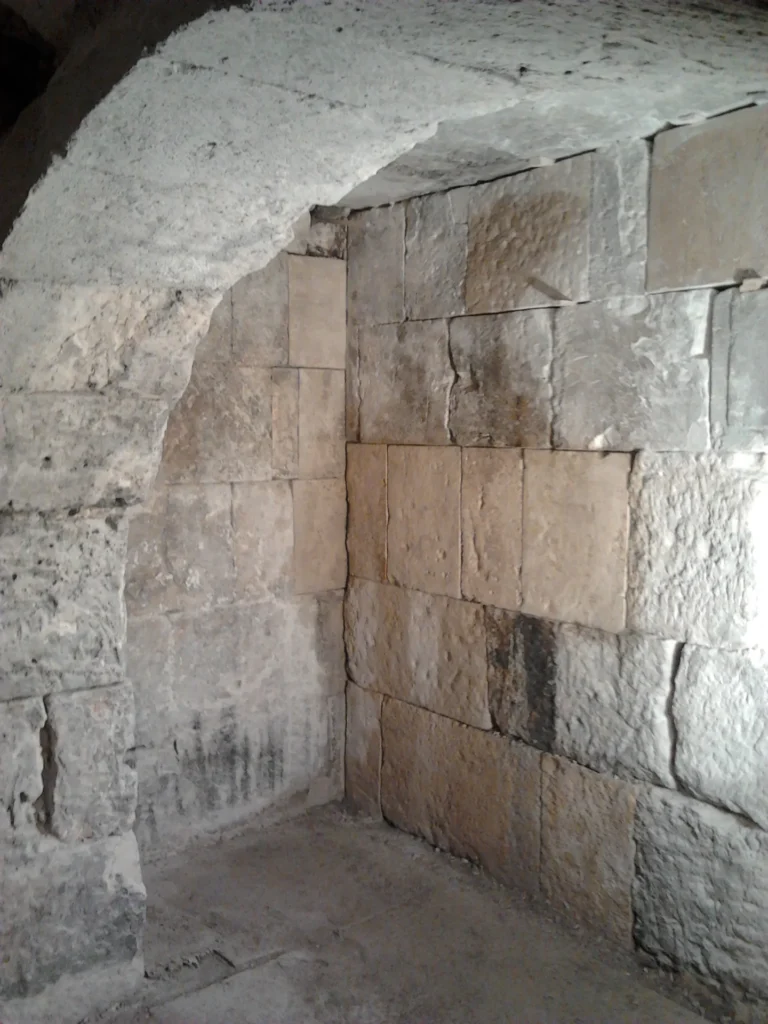
We worked on ancient building fabric: foundations and massive stone blocks from the Constantinian period, dating back to the earliest phase of the church’s construction. Material that is not only historically, but also culturally and politically charged. For a stonemason, this was an almost unbelievable honor.
Working on these stones meant confronting history directly, strike by strike. It was an extraordinary experience and at the same time an immense responsibility to intervene in such an ancient structure using modern tools. Many stone surfaces had been severely damaged over centuries by fire and the sweat of pilgrims. Hard decisions had to be made: entire rows of stones were replaced. We installed new stones (spolia sourced from the West Bank) set with zero joints. I hope the ancient Romans would have been proud of us.
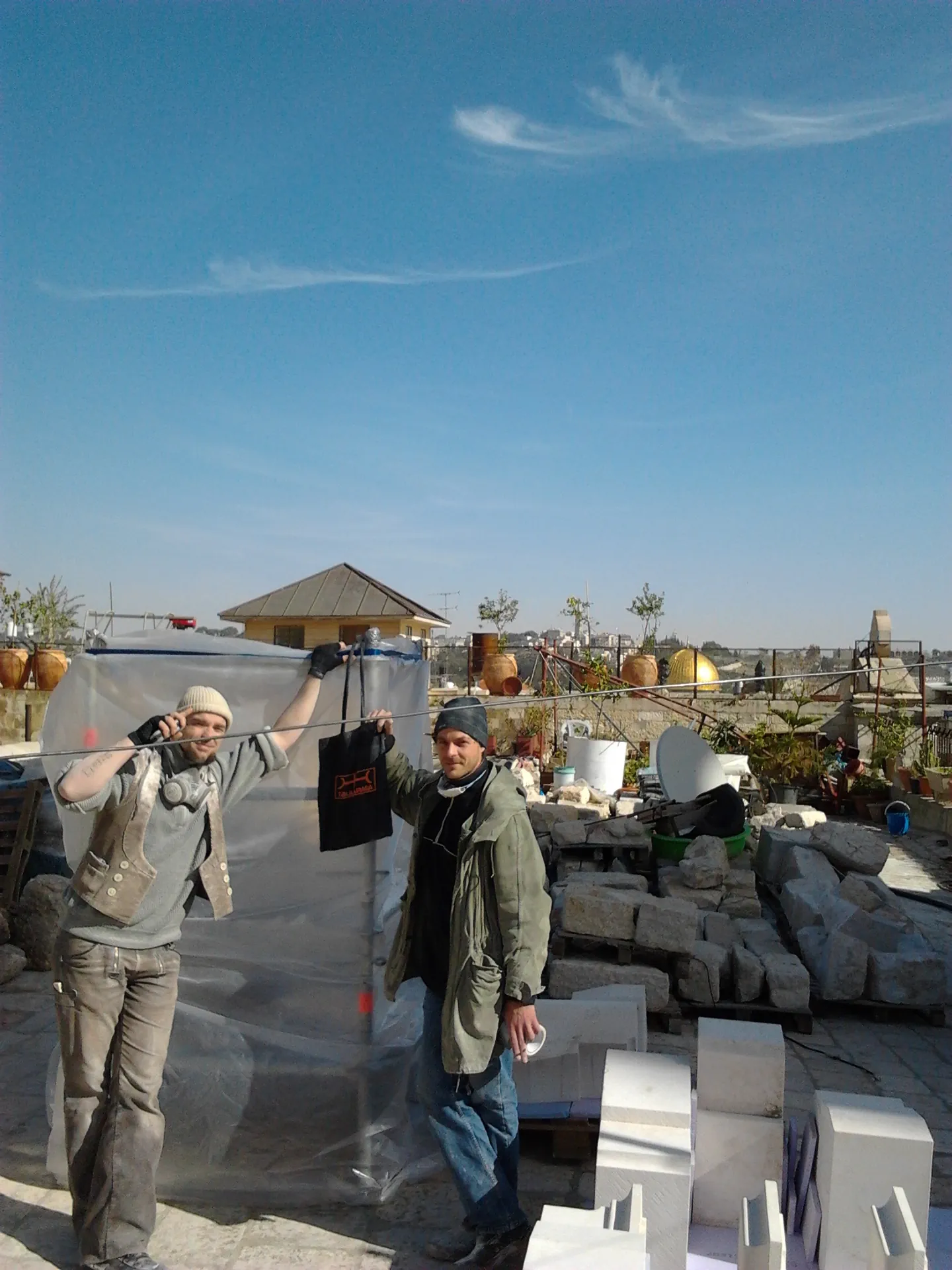
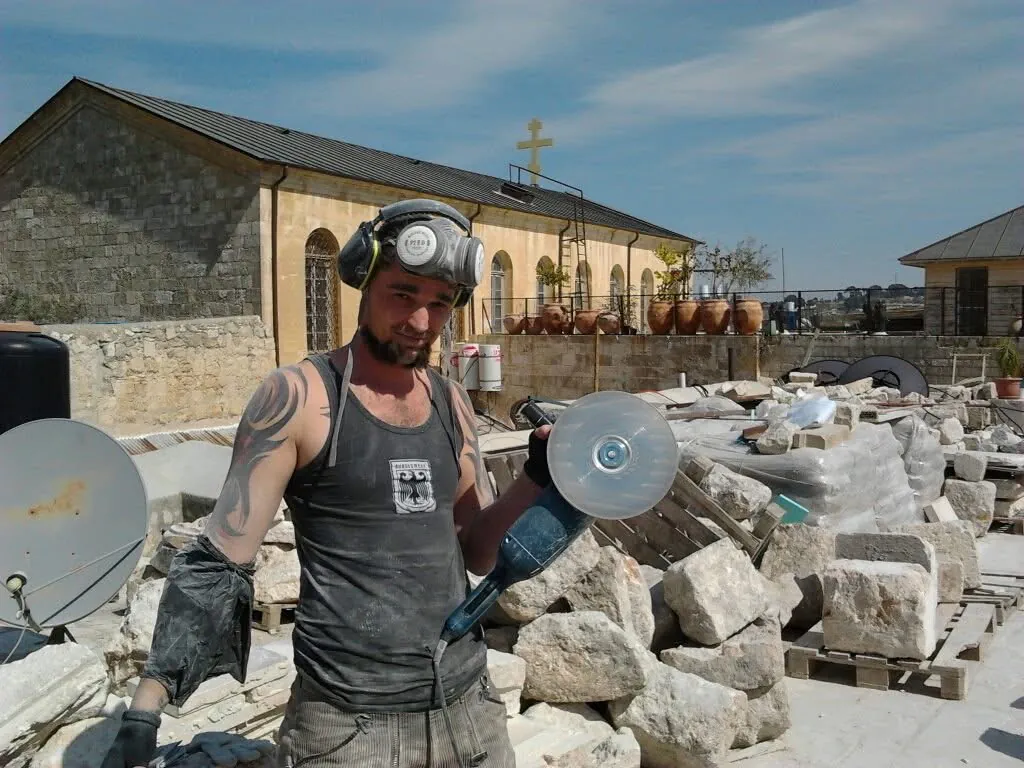
Together with my friend Christian Ibanes, I carried out these restoration works. We were united by a deep passion for the material and a serious respect for the place. Every decision had to be right. Every cut was final. In Europe, we would probably have ended up in court, we were acting simultaneously as historians, conservators, documentarians, and restorers.
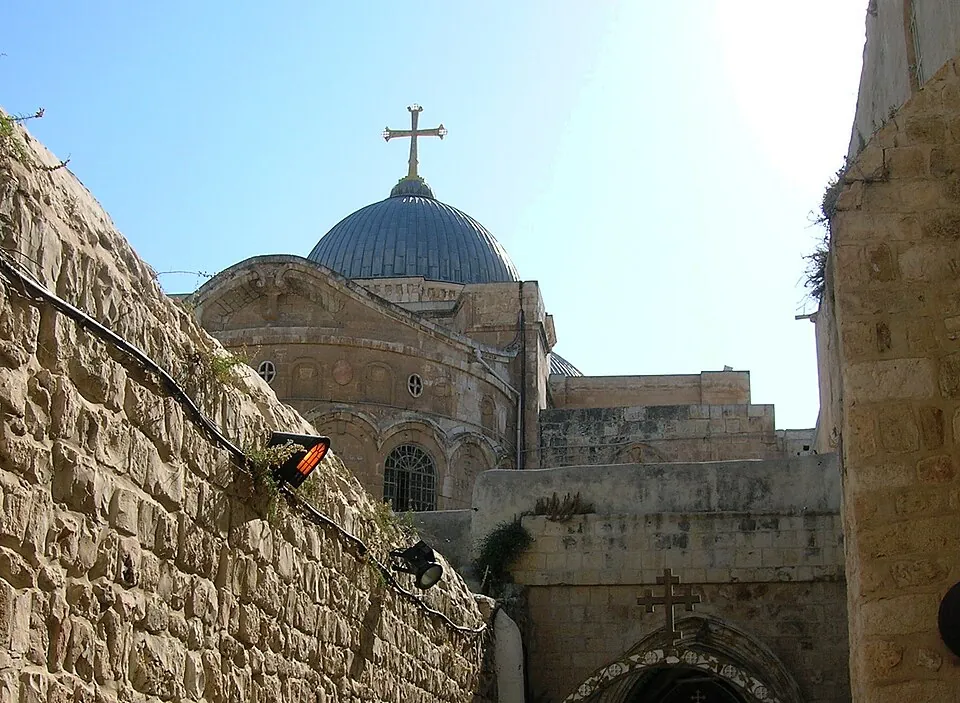
The Church of the Holy Sepulchre is not a place of quiet devotion, but a complex structure of competing denominations. Orthodox, Armenians, Copts, Syrians, Catholics, all share the same space, but not the same history, and certainly not the same spirit. The children of Jesus do not get along particularly well with one another. A Christian amusement park, with fistfights.
Communication was rare.
Mistrust omnipresent.
Fists flew more than once.
Envy and centuries-old conflicts were constantly in the air.
Women’s rights are effectively nonexistent in this context, across all denominations. Women occupy the lowest position in the ecclesiastical hierarchy, regardless of competence or responsibility. Our female(!) site manager, Swetna, nevertheless ran the construction site with absolute rigor and authority, something that was demanded of her daily in this environment. To assert oneself there as a woman required enormous strength. I have great respect for her, even if our collaboration was not always easy.
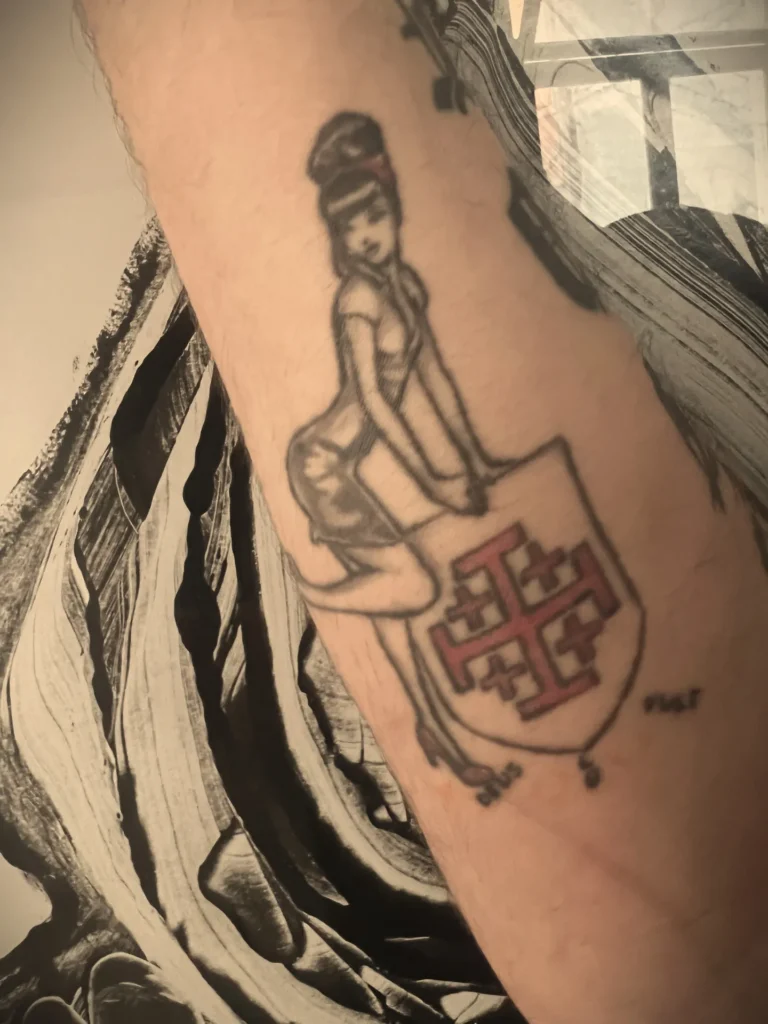
Following an old tradition, my Jerusalem memory tattoo refers directly to this experience: Deus lo vult.
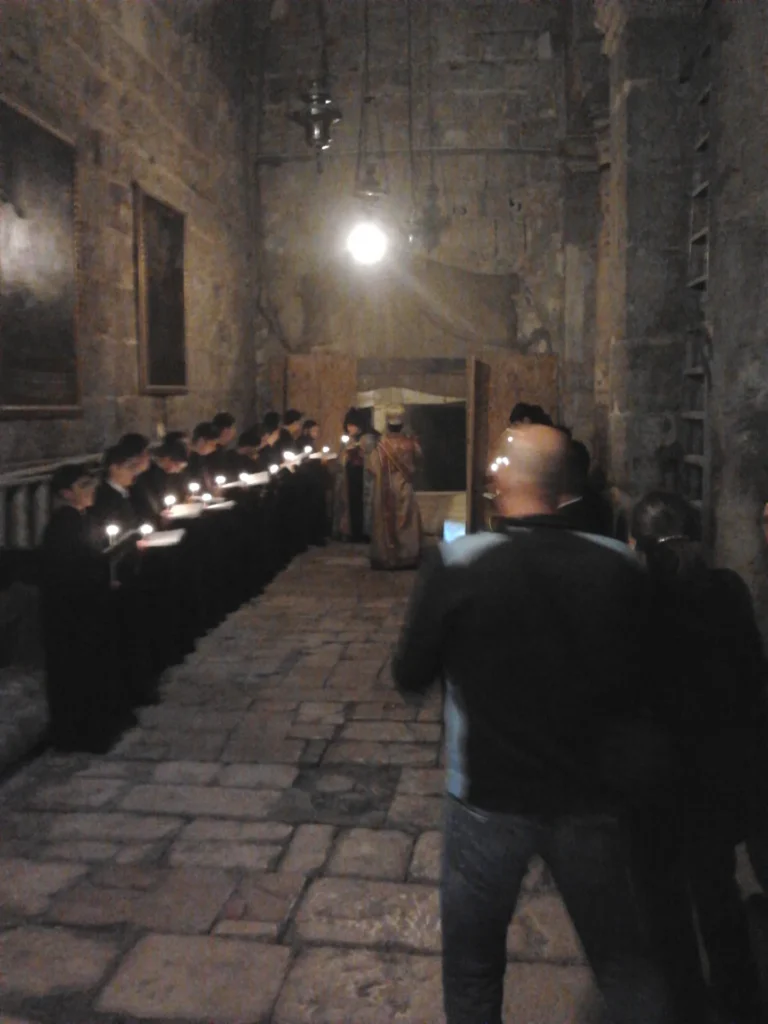
The Franciscans, stationed directly next to our construction site, held regular processions, approximately every two hours, which inevitably interrupted our work and dictated the rhythm of the day. The other denominations, of course, also repeatedly stormed straight through our construction site. By the end, we smelled like walking incense.
Proximity to the Tomb of Jesus Christ
What marked me most profoundly was the work in immediate proximity to the tomb of Jesus, directly beside the burial slab, which we partially restored as well.
This proximity was not symbolic, but physical: dust, tools, noise, touch. No romanticization, only our direct presence at a highly charged site. We had to work quickly, as a constant queue of pilgrims was waiting outside.
The work there felt less religious than existential.
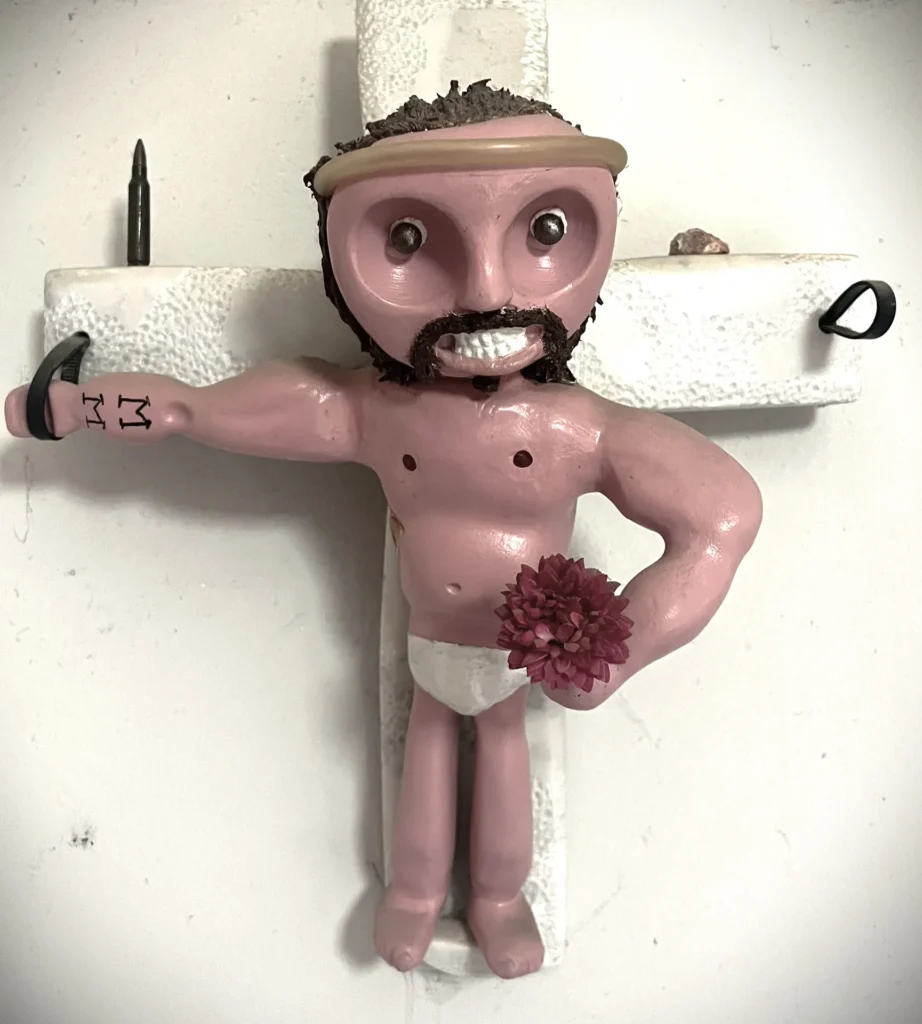
During this period, the first prototype of my Cruxial emerged, an artistic attempt to soften the deeply ingrained Christian iconography of suffering, guilt, and self-hatred. I was searching for another image: a less tormented, almost liberated Christ, standing in for us, and we standing in for him. With Mary Magdalene always at his side.
Alongside the restoration work, I realized several small artistic interventions, including a video installation with miniaturized believers at the Stone of Anointing, quiet gestures, almost invisible, embedded within the continuous flow of rituals.
In the years following Jerusalem, the tomb of Jesus remained a recurring reference point in my work, not as a religious symbol, but as a site of disillusionment: history, abuse of power, body, belief, projection and imagination.
Jerusalem was not a spiritual retreat for me. It was a confrontation with the corporate structure of the Church. My spiritual retreat I prefer a one to one with J himself.
And precisely in that confrontation lay its lasting impact on my artistic thinking and practice. Instilling permanent guilt and a sense of sin in believers is not a solution.
Long live all women.Jerusalem and Rome 2006-12