Within the collective, she is known for her interdisciplinary works that encompass graphics, sculpture, painting, screen printing, and installations. Some of her notable graphic works include:
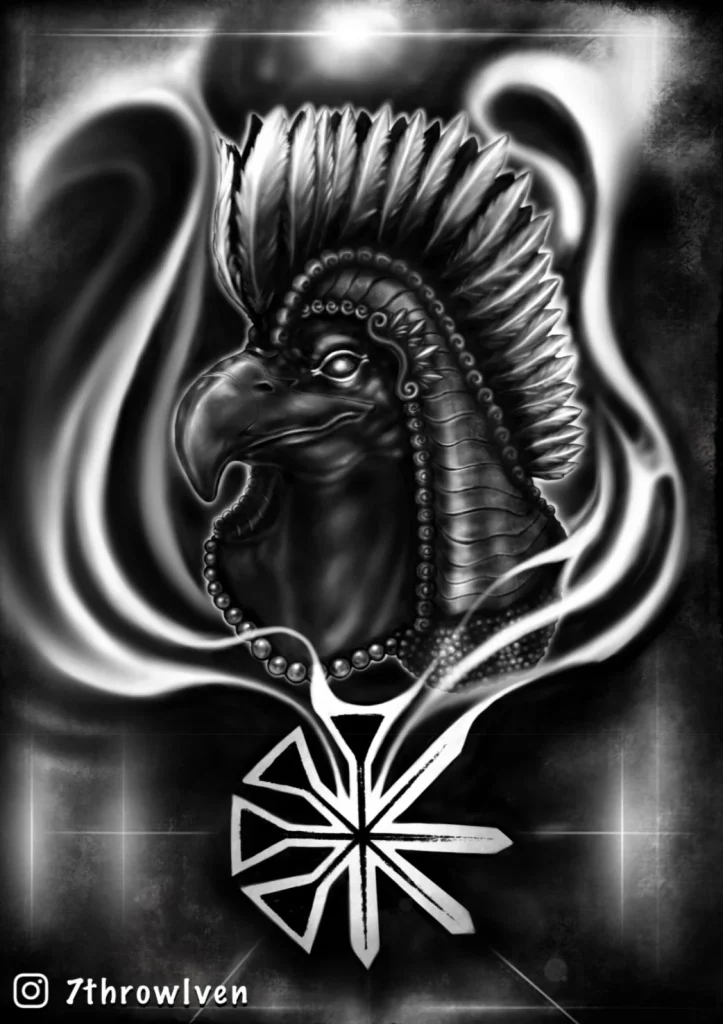
Annunnaki
This piece features a fascinating and symbolic work rendered in black and white. At the center of the image is a stylized depiction of a mystical figure with a bird head, reminiscent of ancient Mesopotamian deities. The head is adorned with an elaborate headdress resembling a feathered or crowned helmet, with pearl necklaces framing the face.
The dynamic composition includes misty, flowing lines that create a sense of movement and mystique. A central geometric symbol beneath the figure enhances the ritualistic and esoteric character of the composition.
The fine detailing and high contrast lighting lend the graphic an almost three-dimensional quality. The work combines mythological references with modern graphic precision, reflecting themes such as power, spirituality, and the supernatural.
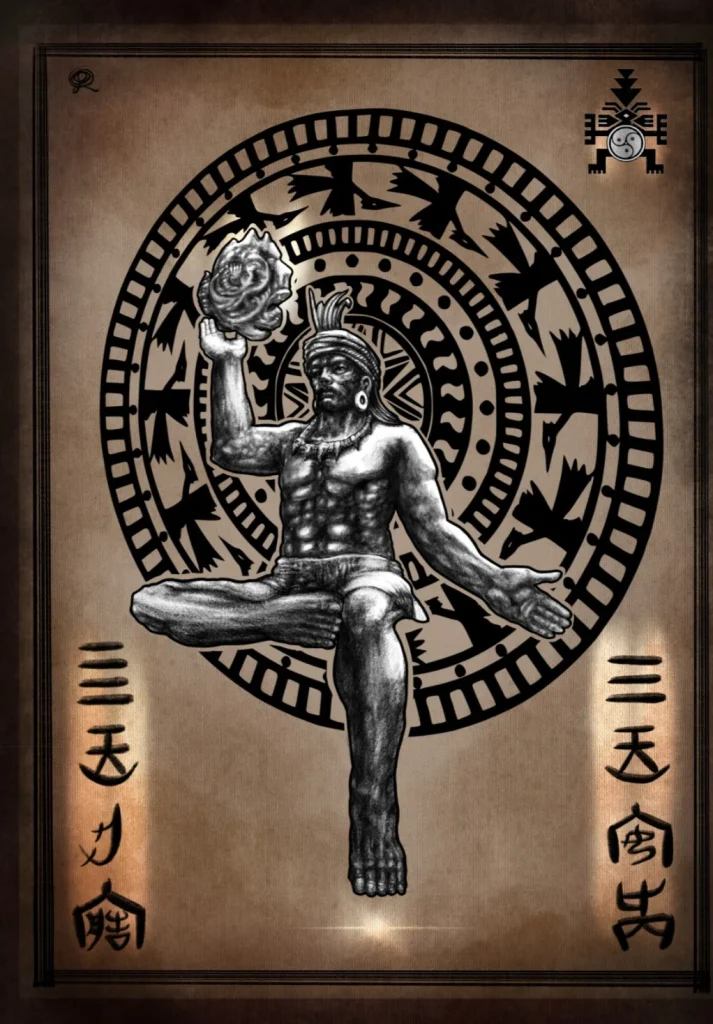
Bu Luotuo
This artwork presents a powerful and complex depiction with strong ties to mythological and cultural symbols. At the center is a dynamic figure with a muscular human body in a poised stance. The figure holds a glowing object in its right hand, resembling an energetic heart or divine artifact, while the left hand is relaxed and extended.
The piece is filled with detailed, wheel-like patterns inspired by traditional calendars or cosmic mandalas, referencing ancient cultures. The work is flanked by inscriptions that add deeper narrative or cultural meaning, framed to resemble an ancient manuscript or sacred text. The earthy tones of the piece give it an archaic and mystical atmosphere. “Bu Luotuo” embodies a connection between humanity and the cosmos, tradition, and spirituality, rich in symbolism and open to interpretation.
Mongolian Shaman
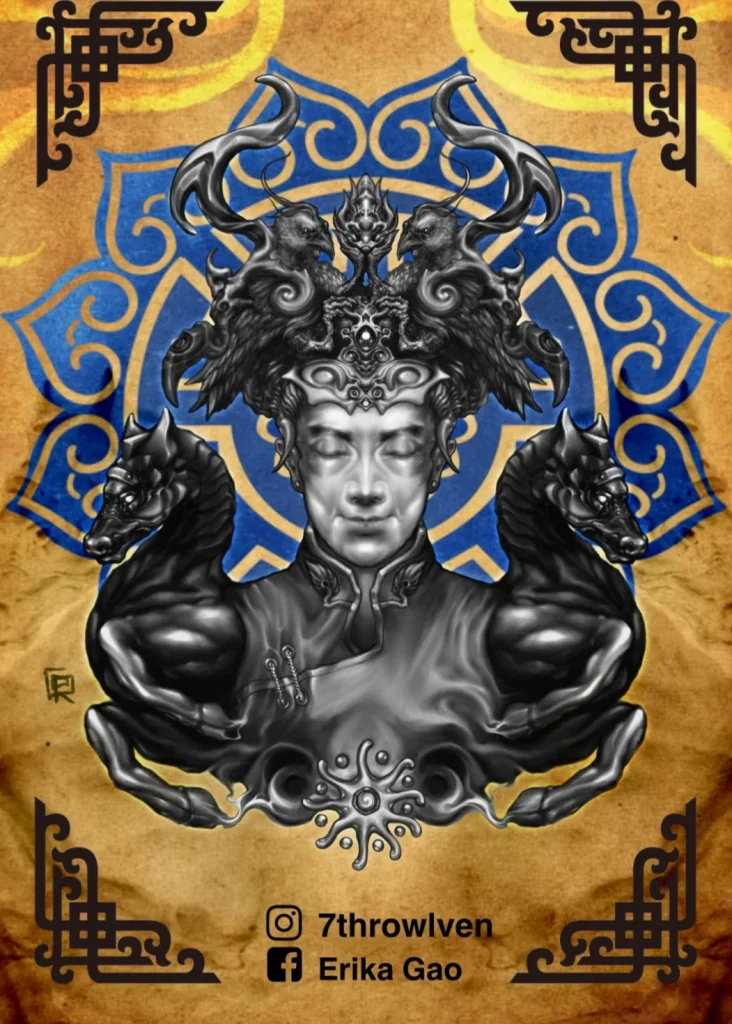
This artwork displays an impressive and symbolic representation, merging spiritual tradition and artistic imagination. At the center is a serene, introspective face with closed eyes, conveying meditation or spiritual insight. The head is crowned with an intricately designed headdress featuring organic forms and two detailed, mythological dragons or birds. This imagery suggests a spiritual connection between heaven and earth, power and wisdom.
On either side of the shaman are black horses, symbolizing strength and freedom, appearing to flow from the figure’s body, suggesting harmony between humanity, animals, and nature. The background, adorned with blue and gold ornaments and flowing traditional patterns, evokes Mongolian folk art or religious symbolism. The palette, dominated by warm earth tones and royal blue, highlights the cultural significance and timeless aura of shamanism. “Mongolian Shaman” is a tribute to the spiritual practice and its deep-rooted connection to nature and Mongolia’s cultural heritage.
Snake
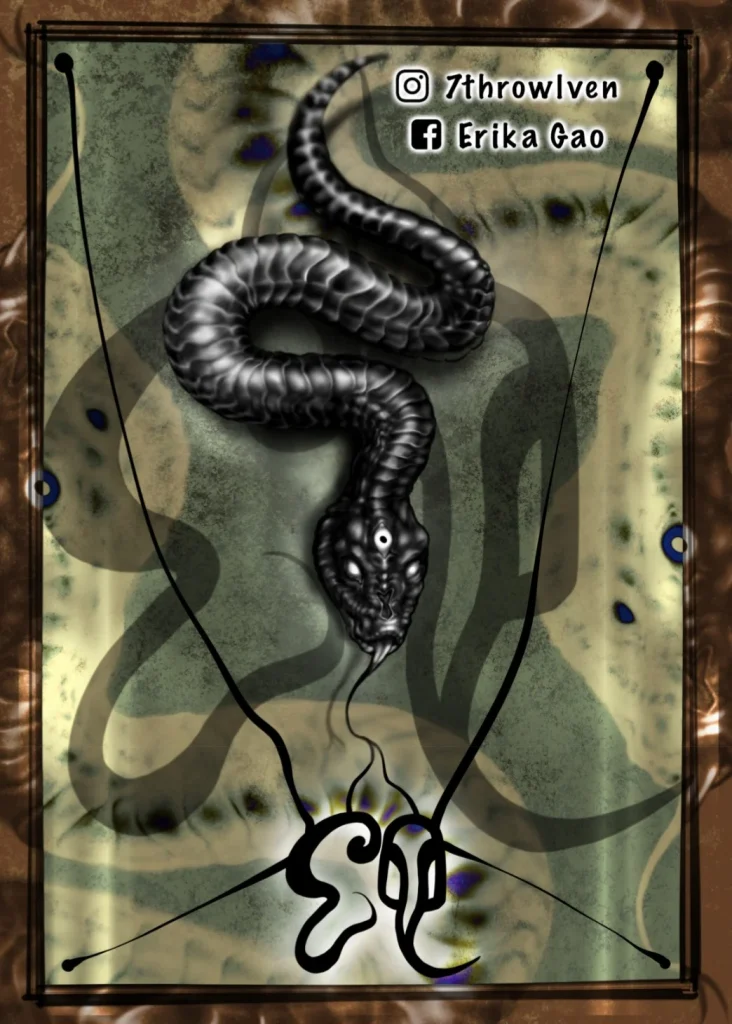
This piece delves into the archetypal significance of the snake as a powerful and ambivalent symbol. At the center is a black snake with a glossy, meticulously detailed texture. Its head is designed to look menacing, with sharp, animalistic features and a glowing third eye on its forehead, a possible symbol of spiritual awareness, intuition, or hidden power.
The snake’s winding, dynamic movement generates energy and tension in the composition. The diffuse background, with organic, abstract patterns, evokes a mystical landscape, while subtle blue and green accents enhance the connection to nature and lend an enigmatic atmosphere.
“Snake” showcases Erika Gao’s ability to merge mythological and psychological themes into a modern graphic aesthetic, inviting viewers to reflect on transformation, power, and the intricate layers of human consciousness.
Taiyi
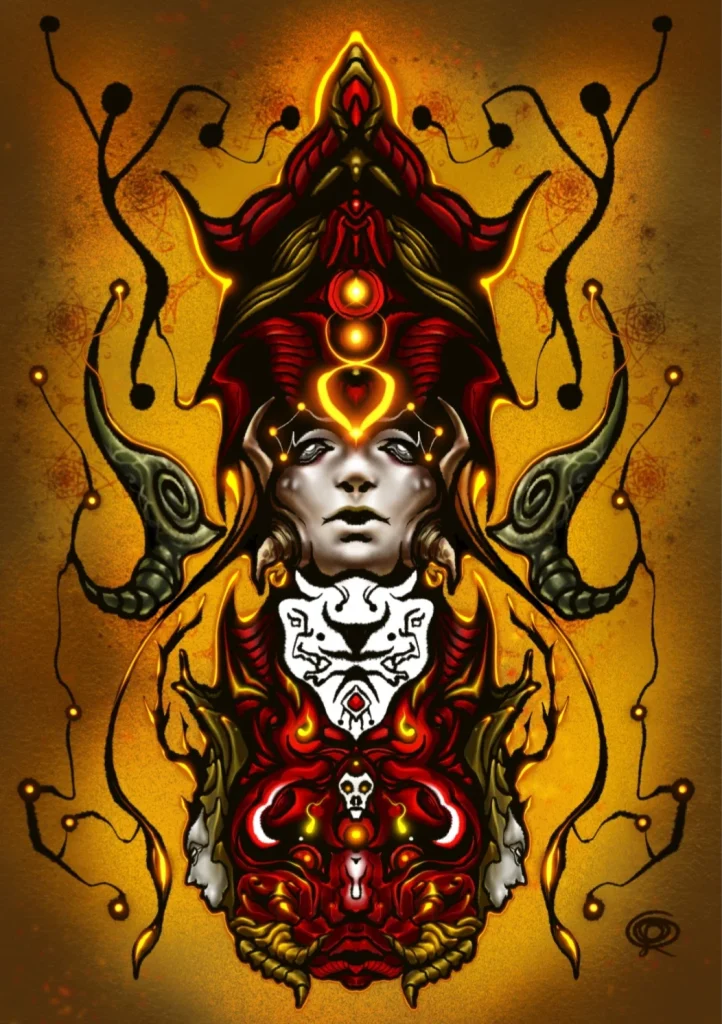
This composition explores both mythological and cosmological themes. The central figure has a mask-like face with a neutral yet piercing expression, emphasizing the mysterious and supernatural.
The figure’s headdress features dynamic, symmetrical shapes in red and gold tones, resembling flames or celestial ornaments. A prominent symbol above the forehead suggests a spiritual or cosmic focus, enhanced by glowing dots and lines implying energy flows. The colors red, yellow, and black dominate, lending the piece a solemn yet ominous atmosphere.
The lower section of the artwork features a red, demonic face with horns and skull motifs, symbolizing the duality between divine and demonic energy. The horn and skull imagery, along with symmetrical patterns, allude to the balance between opposites, life and death, light and darkness, harmony and chaos. The golden background texture and intricate lines reminiscent of cosmic networks provide a spiritual dimension, evoking the universal and timeless. “Taiyi” reflects Taoist philosophy, portraying the balance of forces in the cosmos.
The Brave Capercaillie
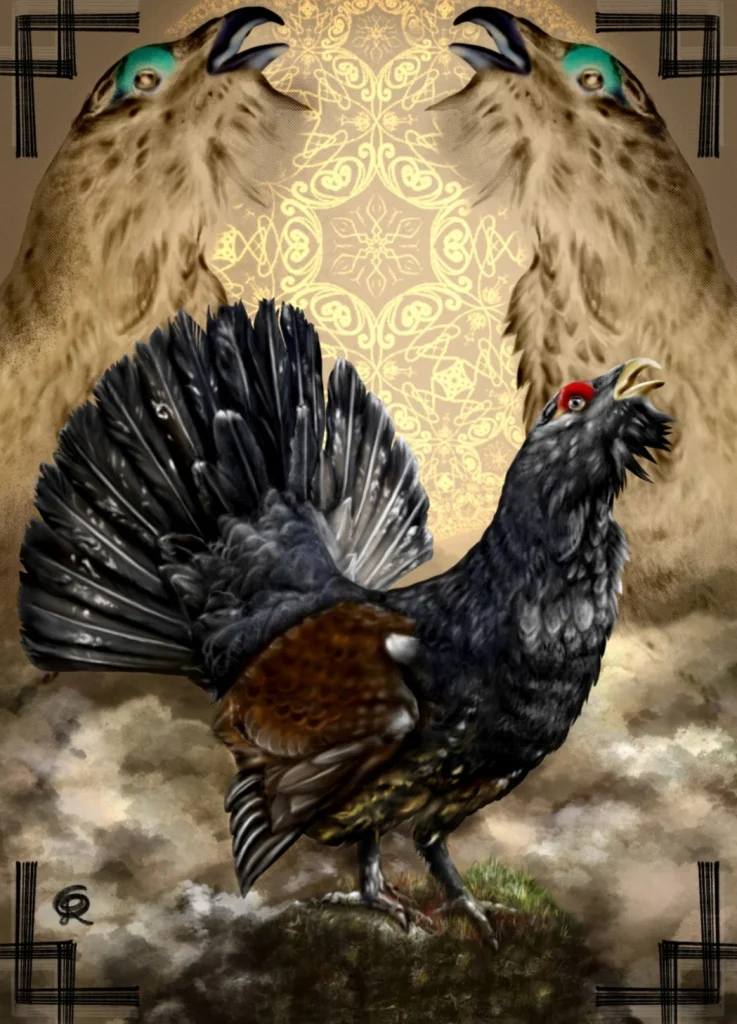
This artwork depicts a majestic capercaillie, symbolizing strength, pride, and a connection to nature. The foreground is dominated by the capercaillie, its feathers intricately detailed and rendered in natural tones. The shimmering black, brown, and gray feathers emphasize its regal posture, while the red comb and open beak convey a powerful and determined presence.
The bird stands on a natural terrain, suggested by mossy greens and earthy tones, reinforcing its connection to the wild. The background is elaborately designed, with two abstracted, golden capercaillie hens symmetrically placed behind the central bird. Their positioning and the choice of golden ornaments lend the work a spiritual, almost mythical dimension, as though they represent protection or reverence.
The floral and geometric patterns in the background evoke traditional designs, enriching the cultural and aesthetic depth of the piece. “The Brave Capercaillie” is a tribute to the wild beauty and strength of the capercaillie, inviting viewers to contemplate the relationship between animals and nature and the symbolic power of this magnificent bird.
Whisper Witness Wood
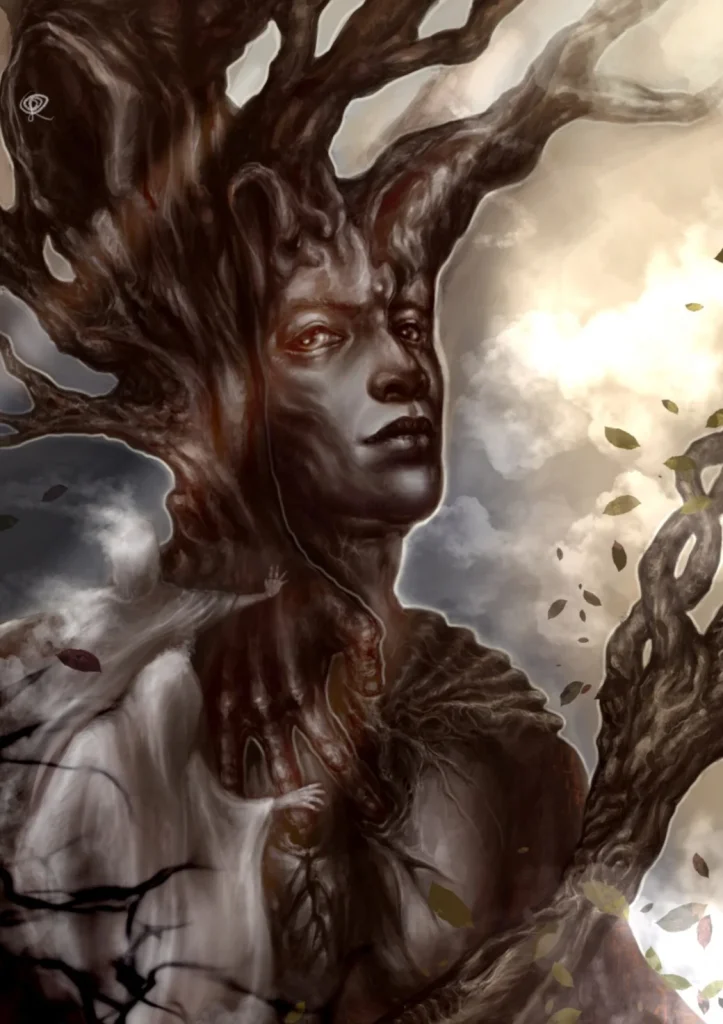
This piece unites nature and humanity in a deeply symbolic and mystical depiction. At the center is a tree-being, its face bearing human features. The powerful symbiosis of tree and human symbolizes the close connection between nature and the human spirit. The striking facial features add emotional intensity, while the twisted branches growing from the head depict the entity as a guardian or witness of the forest.
The earthy brown tones are interspersed with subtle highlights in gray and white, creating a shimmering light effect. The background is misty and mysterious, creating an atmosphere of transcendence and impermanence. Ghostly figures in the lower section appear to reach into the tree-being, symbolizing memories, spirits, or past lives preserved by the tree.
The falling leaves and gentle movement of branches evoke a sense of time and change, offering viewers a meditative reflection on the nature of life and the cycle of birth, death, and renewal.
Taoist Guardian
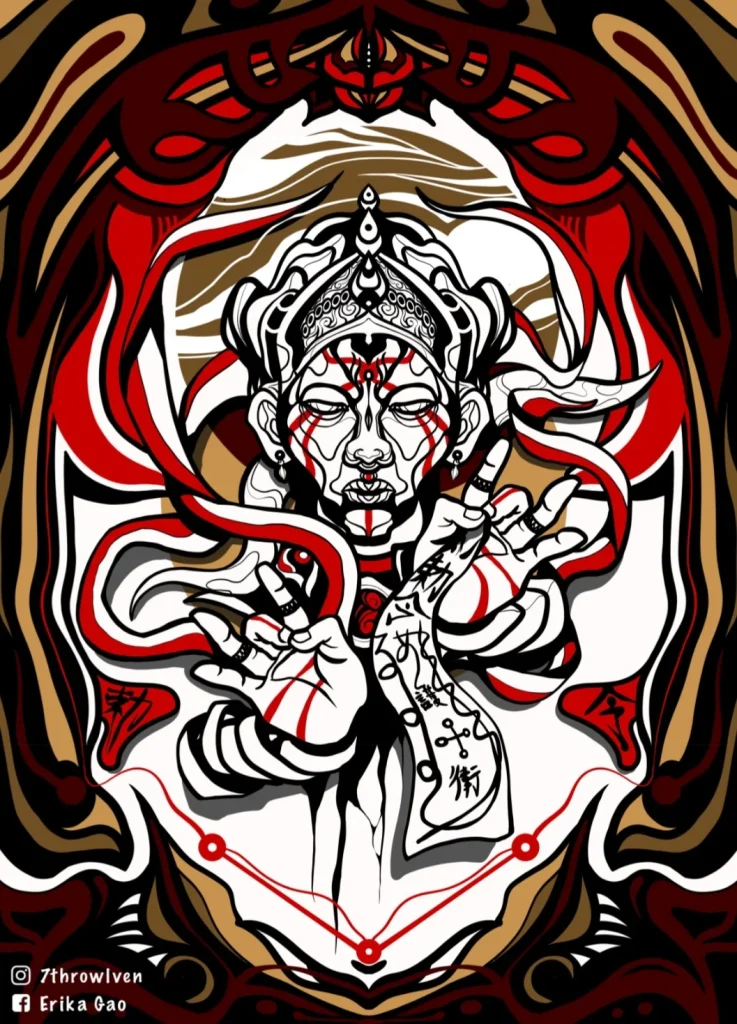
This illustration is deeply rooted in Taoist mysticism. At its center is a meticulously designed figure with a sacred, focused expression. The face is adorned with red lines, symbolizing spiritual markings or rituals. The intricate and symmetrical headdress points to a connection with Taoist tradition, possibly representing a divine or protective entity.
The guardian’s hands are the focal point of the composition, gesturing to convey both protection and the flow of energy. Mystical signs and symbols on the arms and hands suggest deeper ritualistic or magical significance. The red ribbons swirling around the figure enhance the sense of dynamism and movement.
The color palette is dominated by bold reds, blacks, whites, and golds. These colors often hold specific meanings in Taoist philosophy, red for life and energy, black for the mystical and hidden, and gold for divine power. The background and framing structures feature organic patterns and lines that convey a sense of protection and authority.
“Taoist Guardian” embodies the spirit of a protector, guarding both spiritual and physical barriers, encouraging contemplation of the role of protection and spiritual power in Taoist philosophy.
Carrara 2022