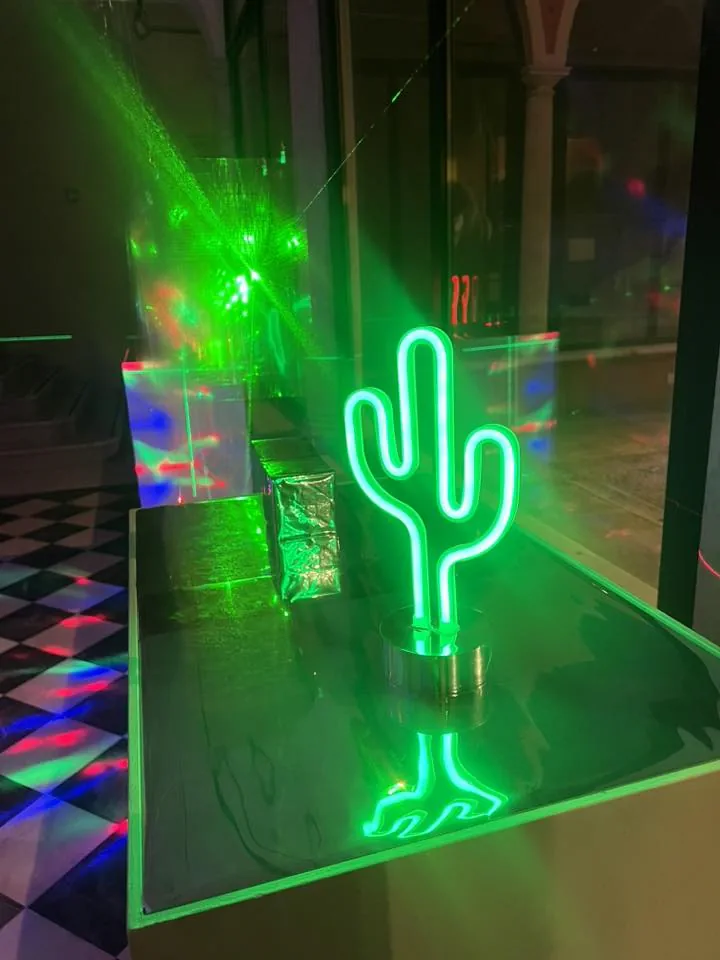
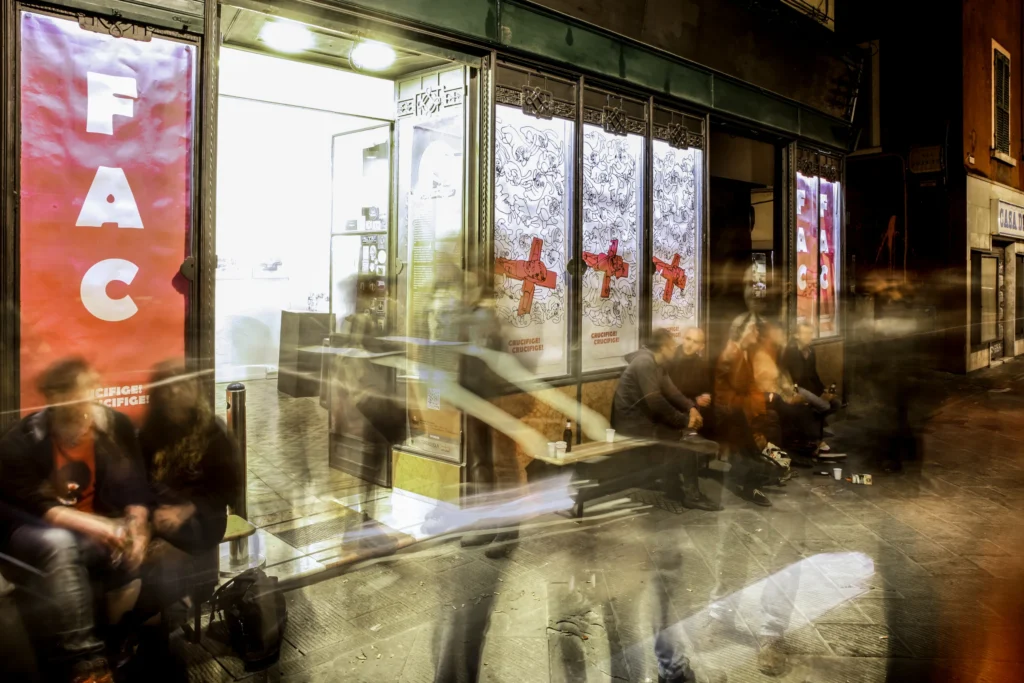
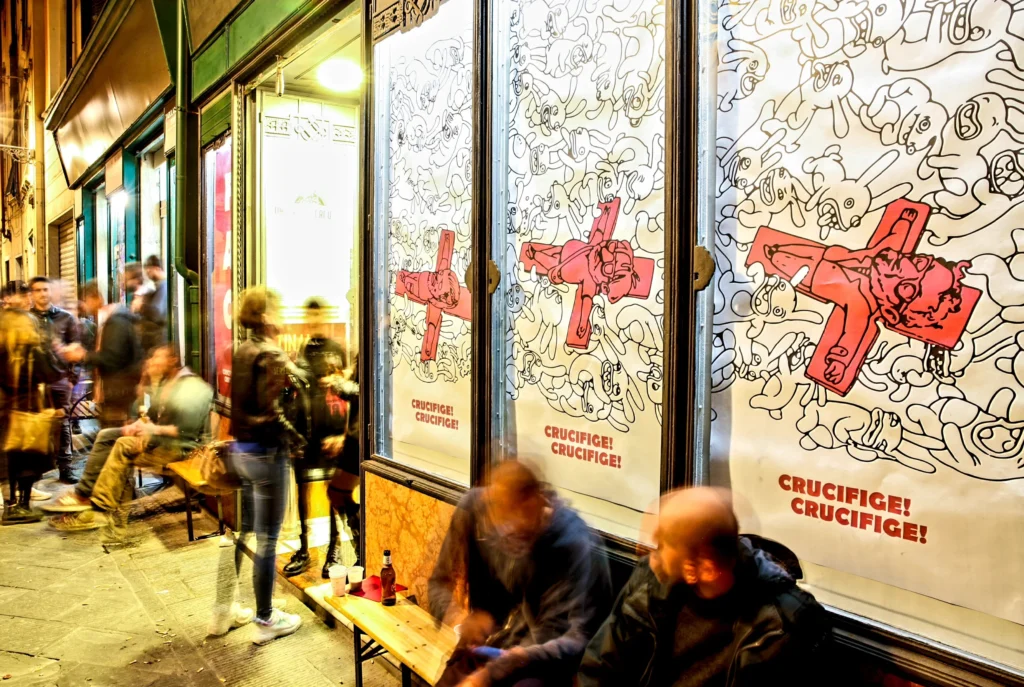
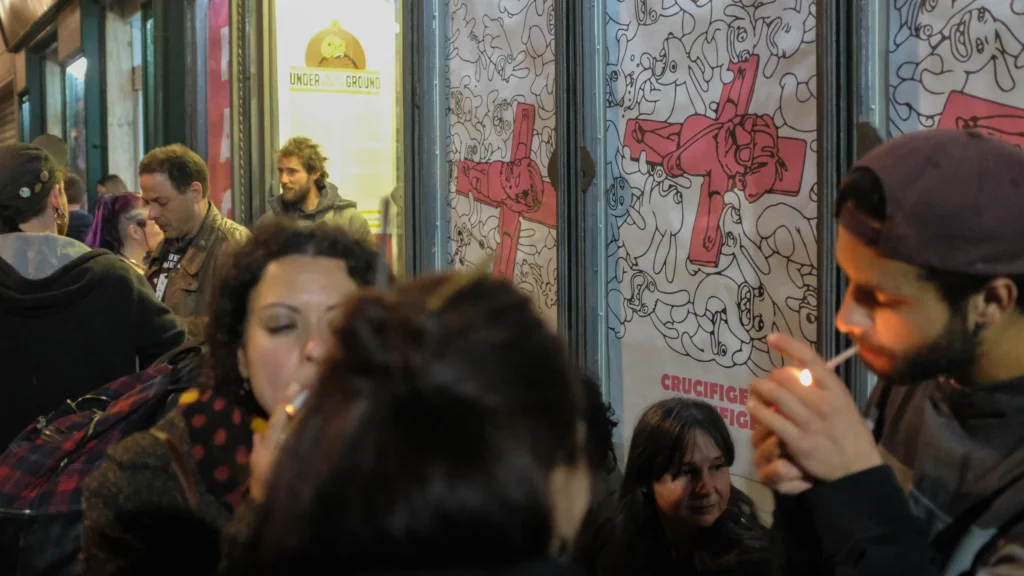
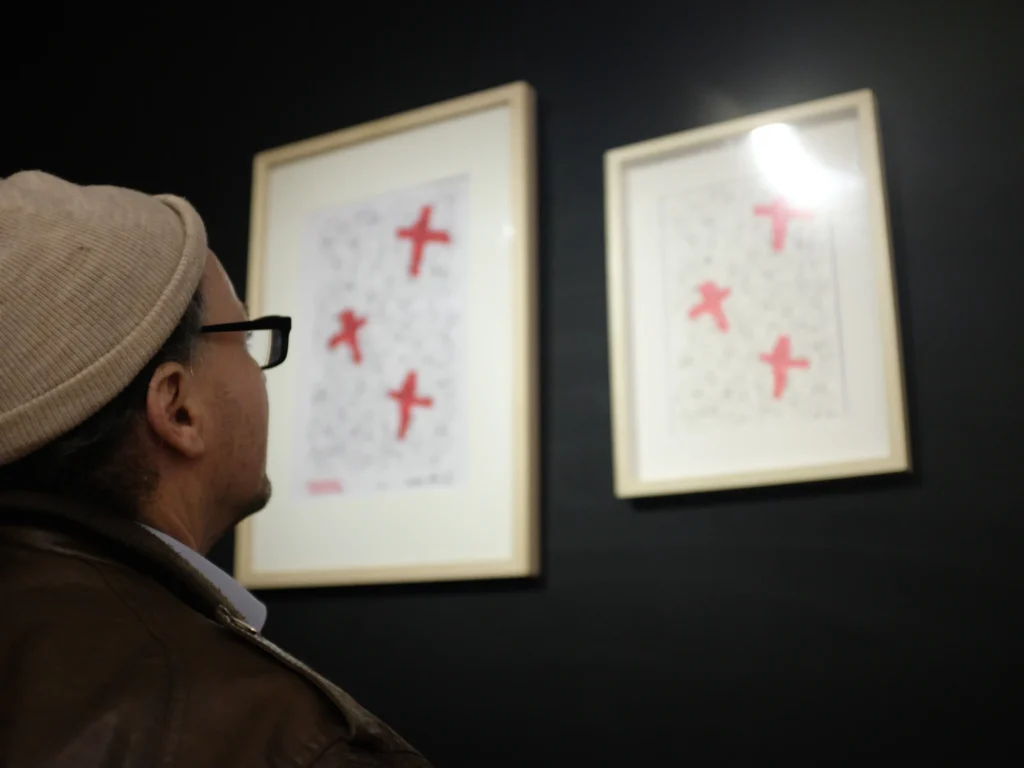
The two installations will be positioned in the first two rooms of the Teke Gallery in the heart of Carrara and will address the theme of crucifixion, which is very close to the hearts of the artist trio. The series of crucifixes (Cruxials) is a project that has emerged in recent years and is in continuous development until its final completion.
“From the artists’ presentation text regarding the series: ‘If it is true that every Christ has their own cross, then FAC is ready to produce the right cross for every type of Christ! In our beautiful, hopeless world, it takes very little to be crucified and pay for all one’s mistakes; anyone can become the perfect Christ to be offered to the ever-hungry masses of prophets!’
‘We are all the most beautiful in the world; we can be your personal Christ.’
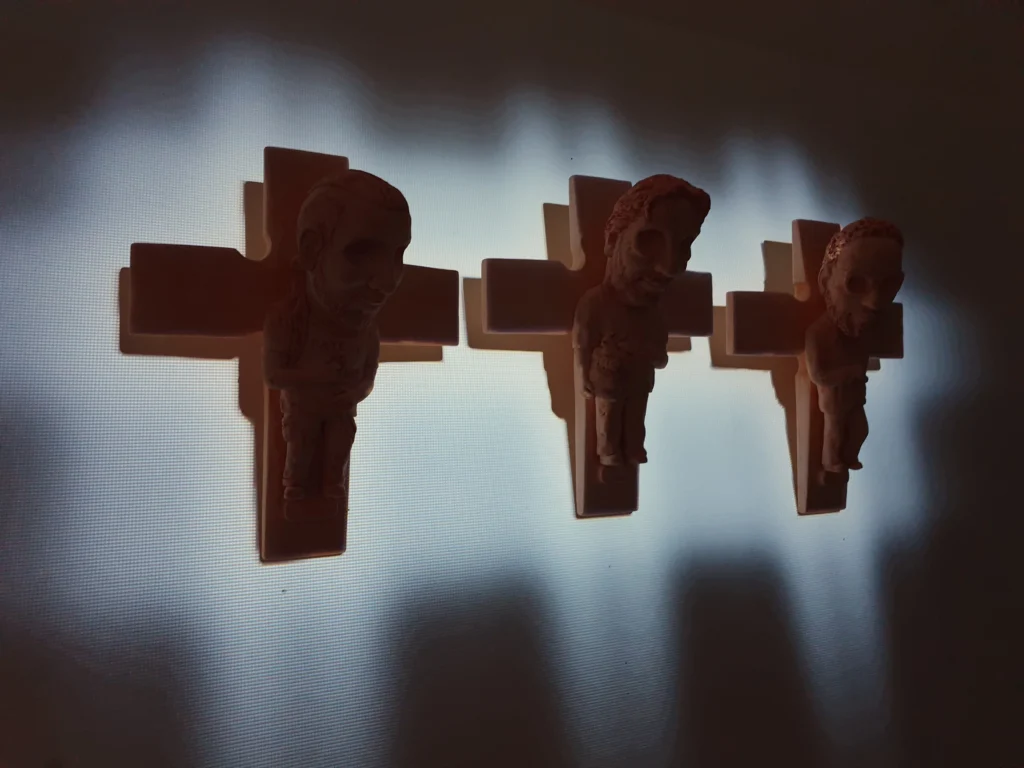
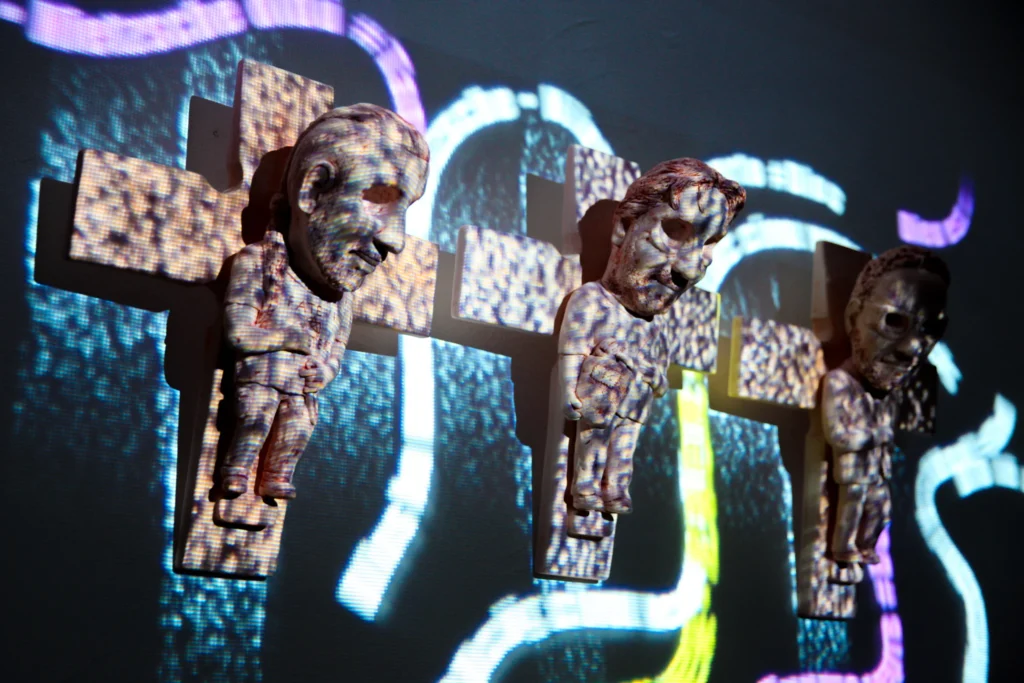
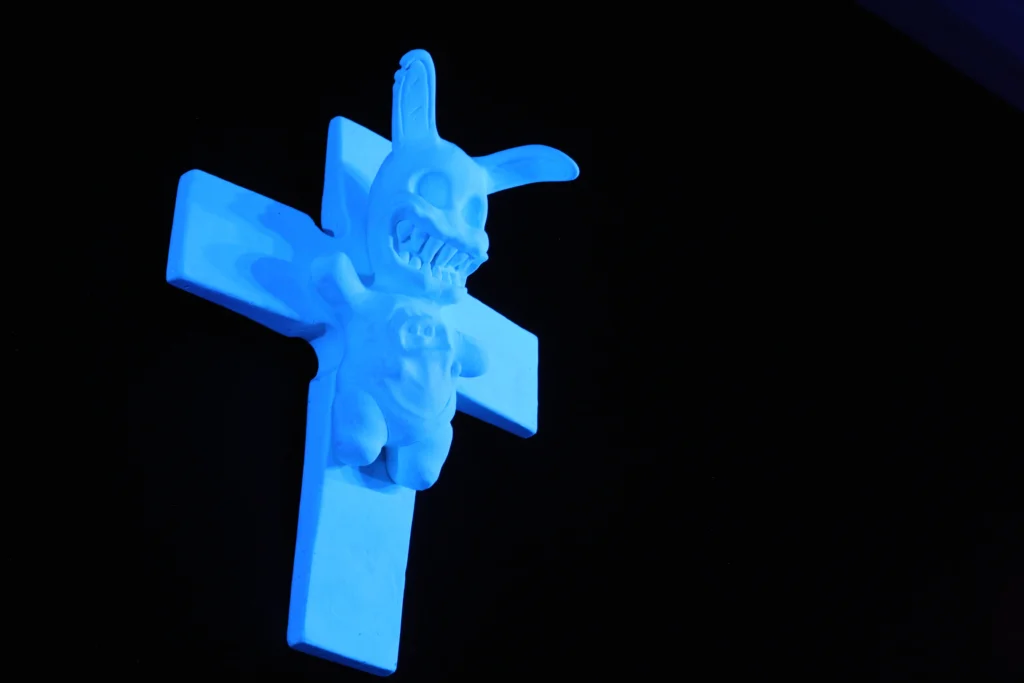
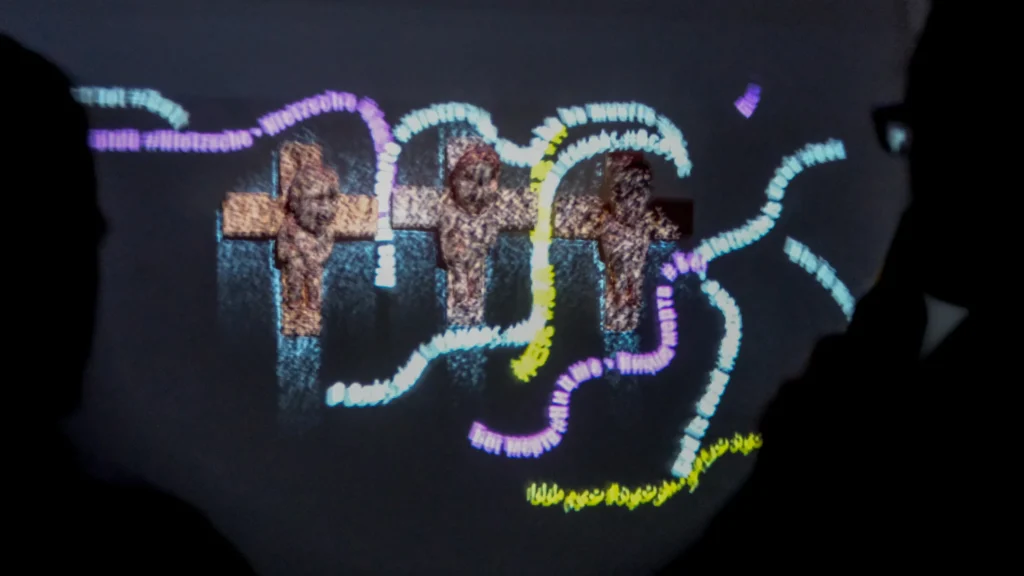
The Cruxials have a deformed, grotesque humanoid anatomy that accentuates the recognizable facial features of the various depicted characters. The unique and unifying element of these crosses is the complete absence of visual sensors. Instead of eyes, there are deep, sunken cavities that are no longer the mirror of the soul but a reflection of the abyss. An abyss represented by the vices and virtues (mainly vices) of the various crucified subjects.”
Room 1 “The Bad Trips”
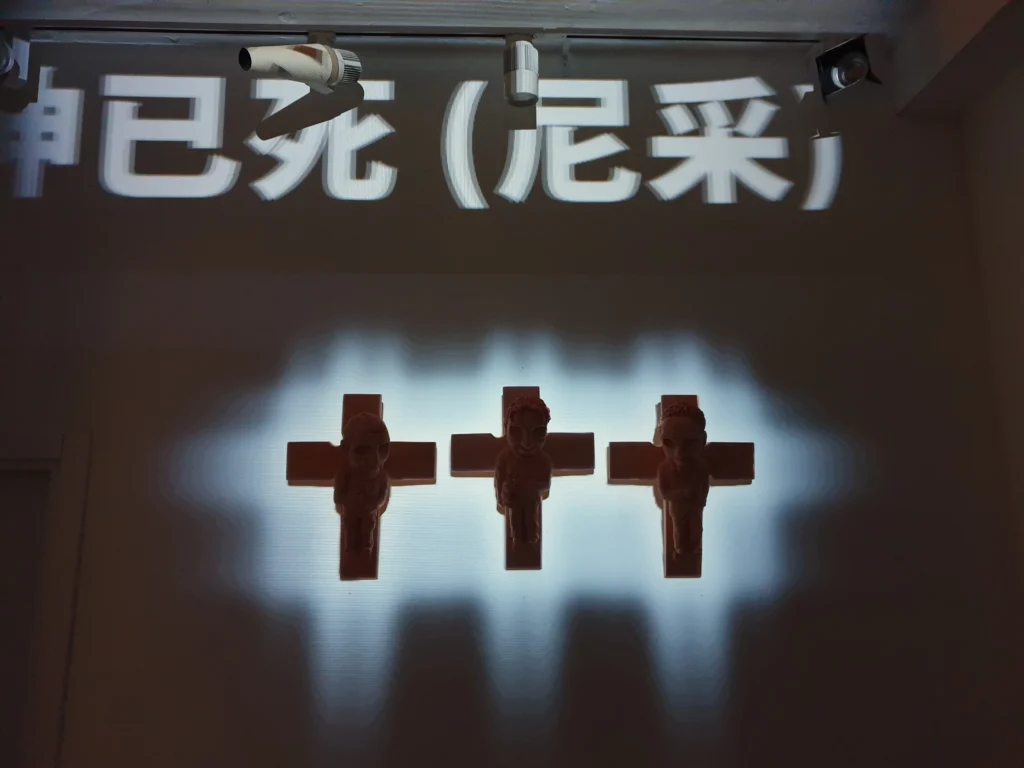
From this premise, it is not hard to understand why in the first room of the gallery, three figures hang on the wall, not very well known to the general public, but reflecting the folklore of the nights and the urban legend world within the social fabric of our beloved Carrara.
The three sinister figures with mocking smiles and hollow gazes represent the Gallerist, the Curator, and the Director of the Teke Gallery. A trio that, even outside this borderline reality, represents a sacred trinity in the world of contemporary art, before which every artist must bow and pray to secure their survival. Gallerist, Curator, and Director, like the Father, the Son, and the Holy Spirit.
The Gallerist-Father creates a world but has no time to oversee it personally, being too occupied exploring the boundaries of his life and the universe of past, lost, and existing future possibilities. The Curator-Son takes the soul of the Father and tries to give it a form that is digestible for everyone who must join the sacred “Gallery-Church” to delight in and contemplate the blood and faith in art through the sacrifice and blood of the proposed artists.
The Holy-Spirit-Director is a messenger of change and faith, a steadfast pillar on which everyone projects their fears and anxieties, a stable rudder of a ship that is always on the brink of sinking and cannot afford to falter.
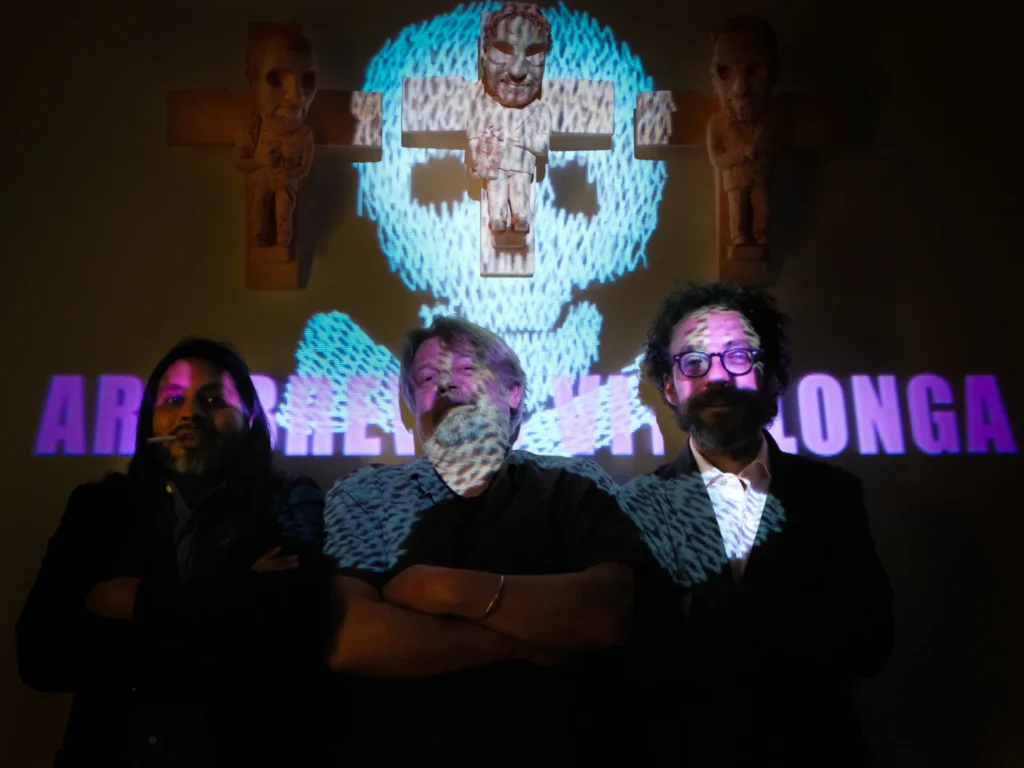
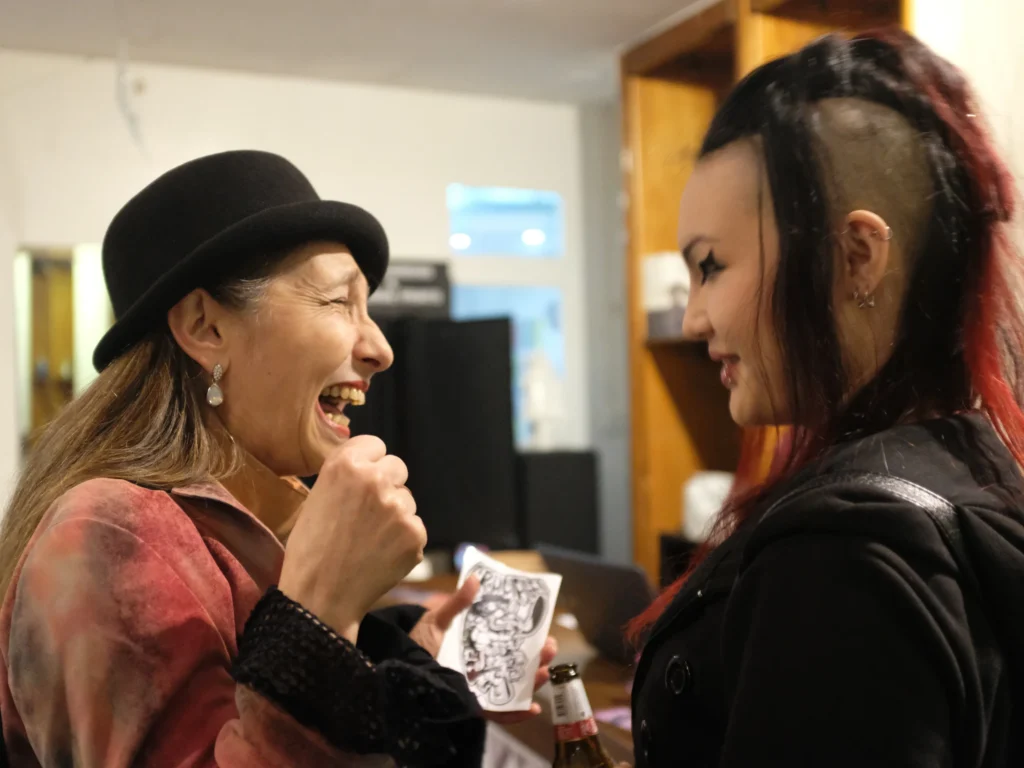
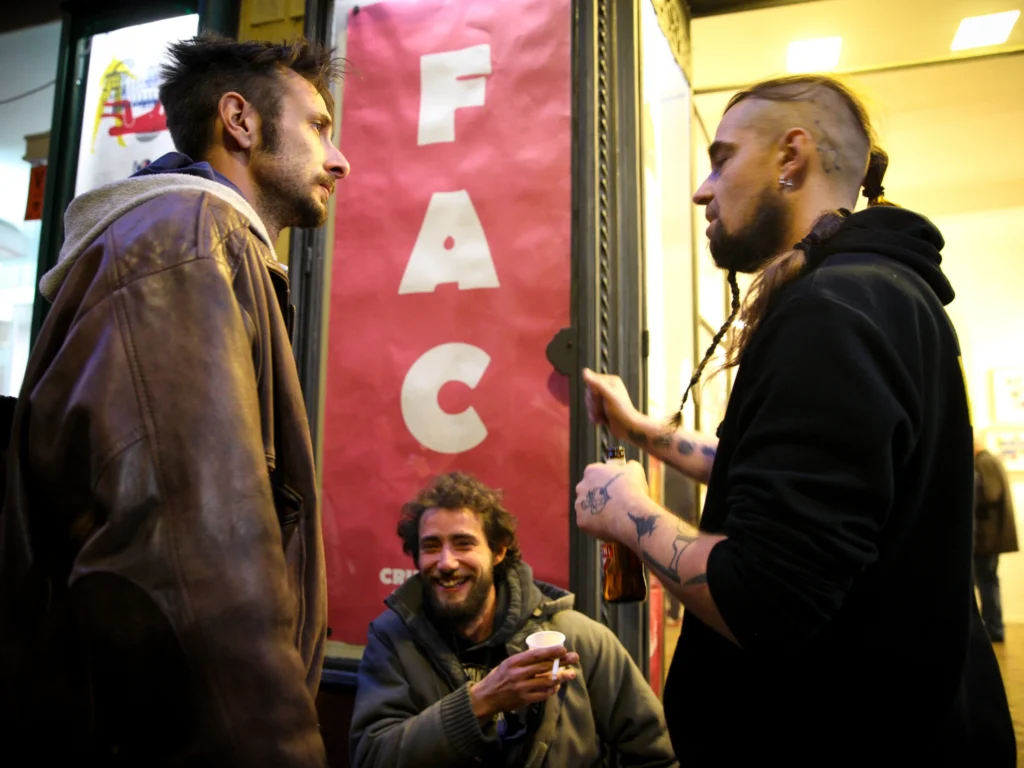
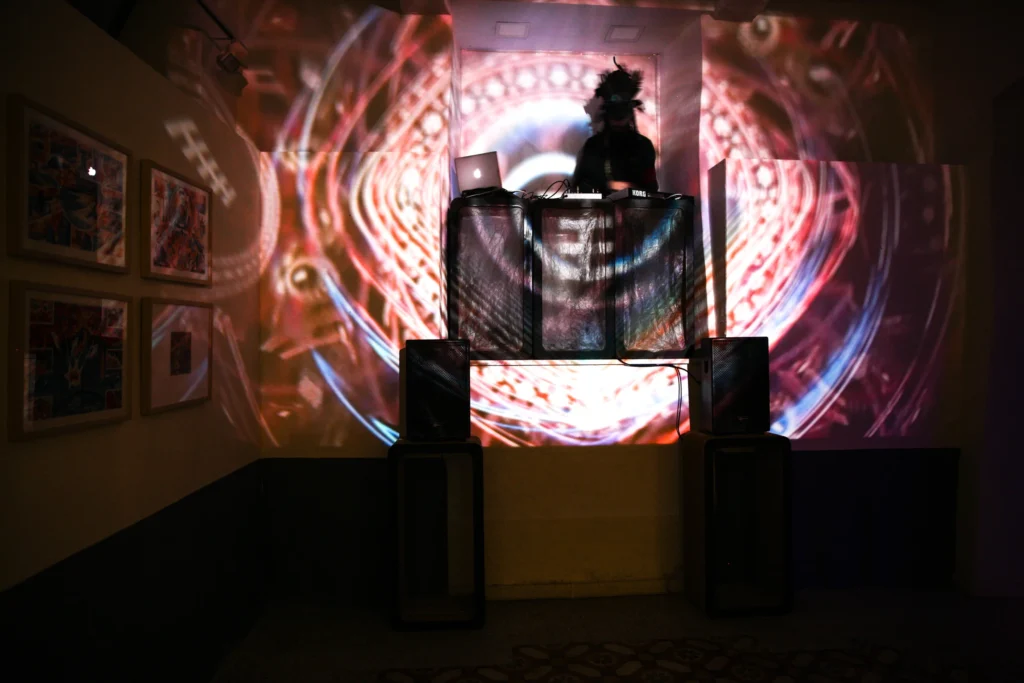
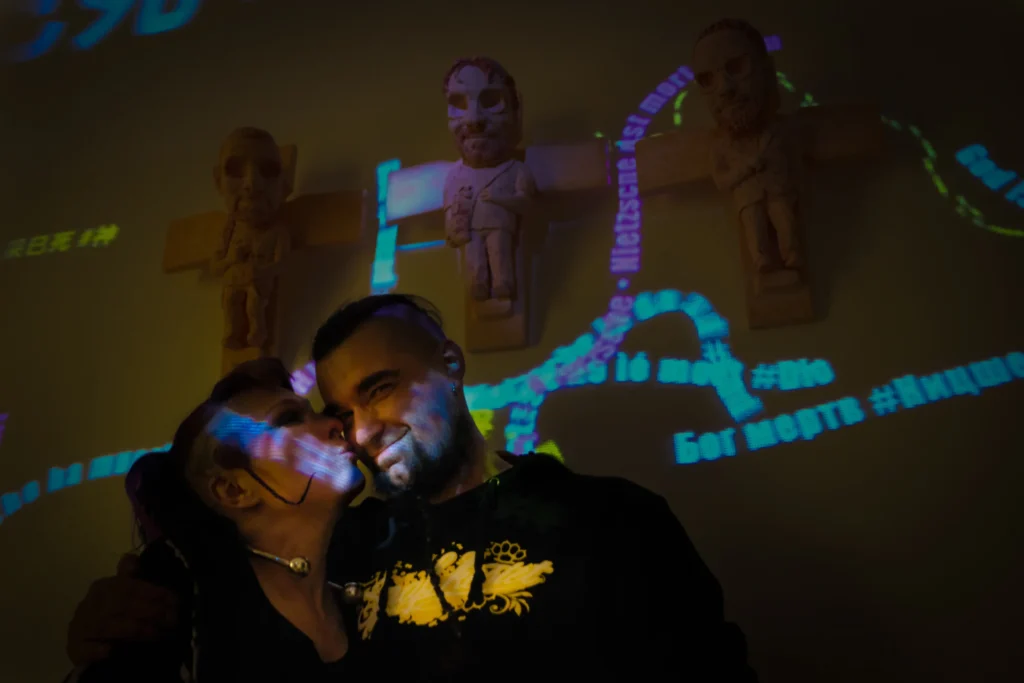
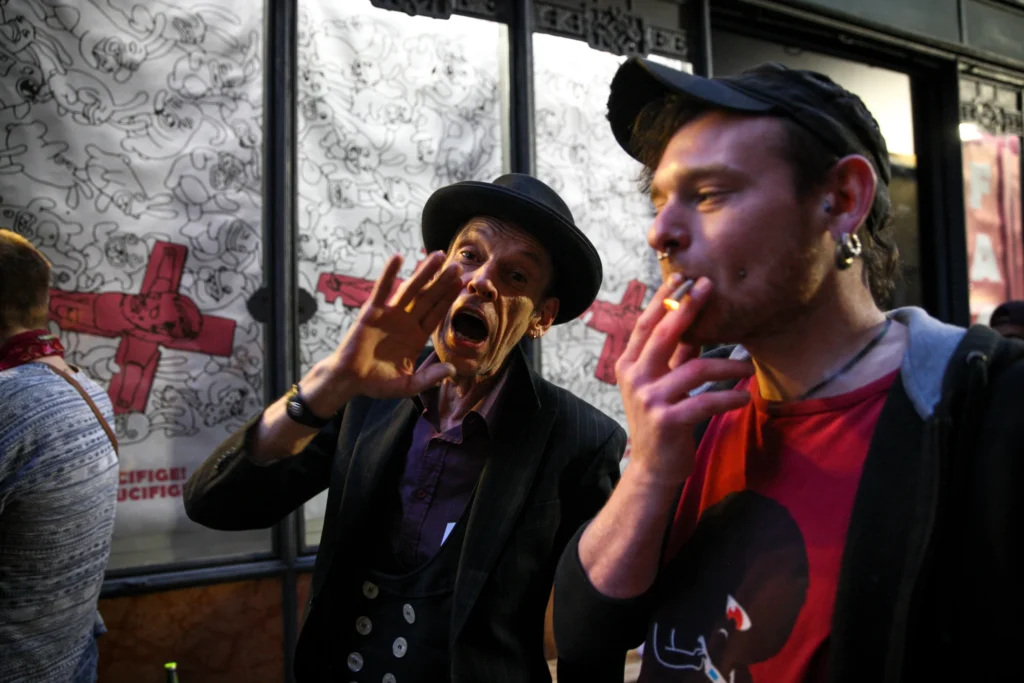
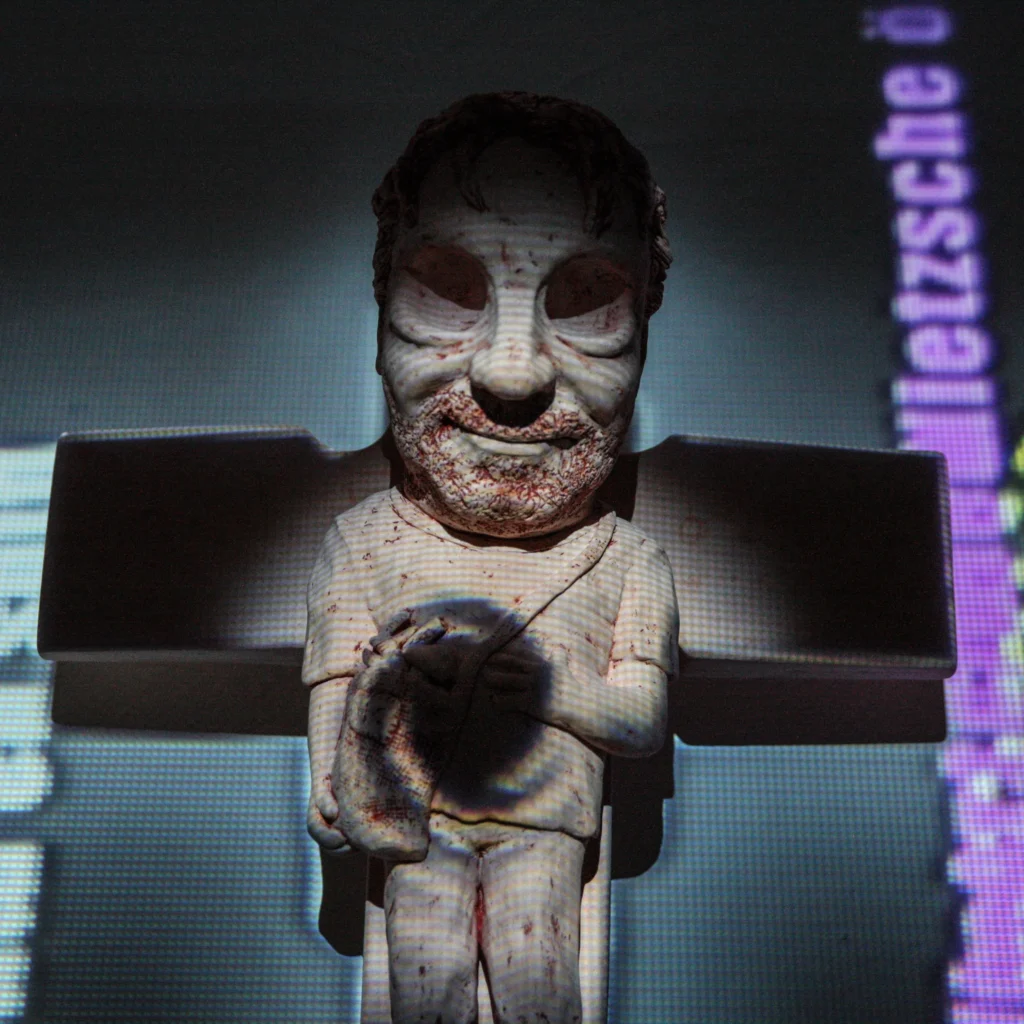
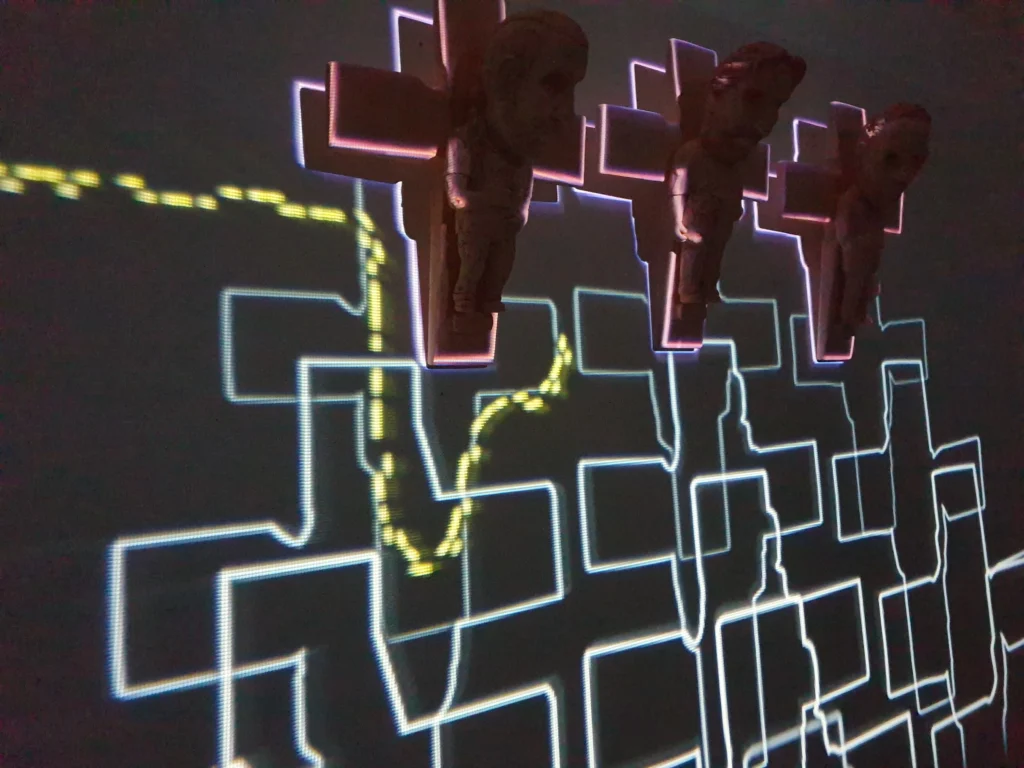
It is exhausting to play the holy trinity. One understands, God is dead, as Nietzsche said, and it is even more understandable that He is even more dead when one thinks about the effort, the pain, and the difficulty of stepping into the shoes of a holy trinity to invest everything one has into the dream of gifting culture to a people who often have no time to listen and see little.
God is dead, long live God. Death should not be viewed as a mere negative concept of “End.” Every new beginning comes from the end of another beginning, and we should not be afraid to see the Gallerist, Curator, and Director on the cross, sadly smiling, almost glad to remain suspended. This is their life; this is their choice.
They do what they do not only for the money (if there were any) but to give a moment, to gift culture, to offer people a moment to reflect; on their own life, that of others, the matters of the world, or perhaps on nothing at all. What matters is to provide a pause in this world overflowing with images and the resulting media flatness. What matters is to give faith, hope, a memory that maybe our world isn’t so terrible if there are still people ready to be crucified with an unwavering gaze and a smile on their face.
Room 2 “Bunny 2.42”
The second room, in contrast, is a profane and desecrating homage to the holy Easter. We are used to considering this holiday as one of the most significant in the Christian world, but Easter itself has its origins in pagan rites, more than 2000 years before Christ in Babylon. This festival was originally a celebration of fertility and the rites of passage from winter to spring. Millennia before Christ, houses were already being painted with flowers and bunnies.
The pagan rites of the world are rich with celebrations of death and resurrection, and bunnies and eggs symbolize fertility and new birth. Hope for the future.
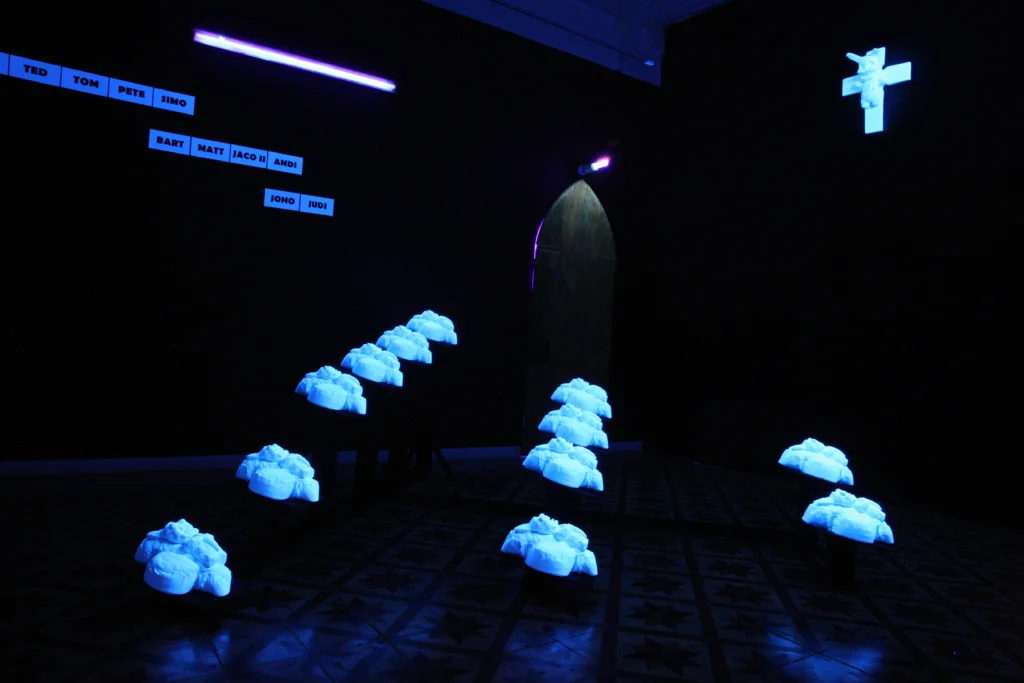
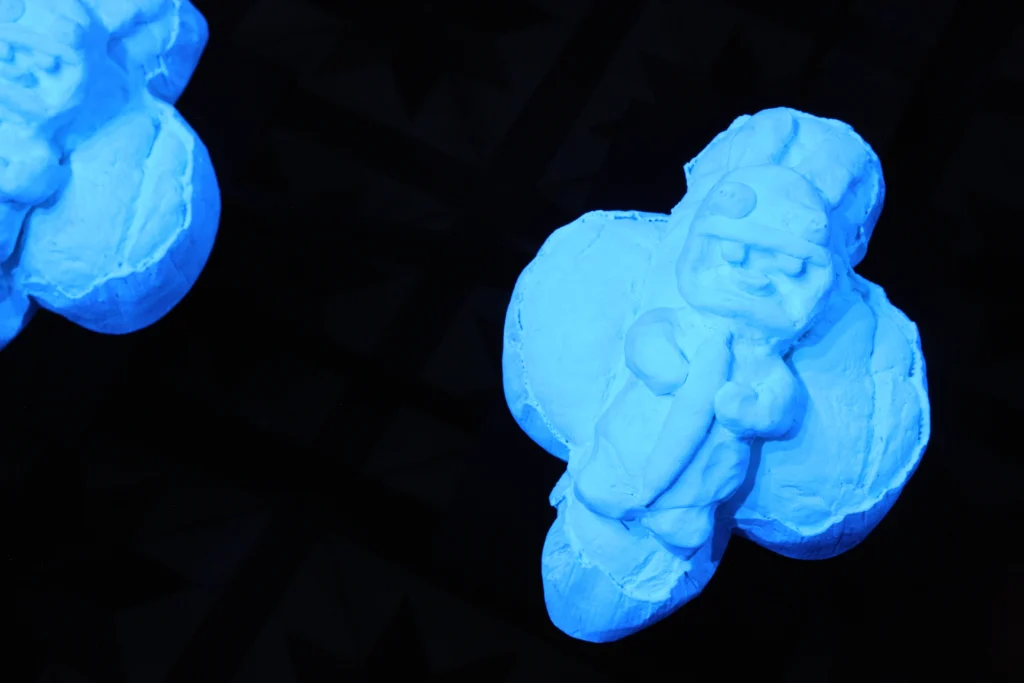
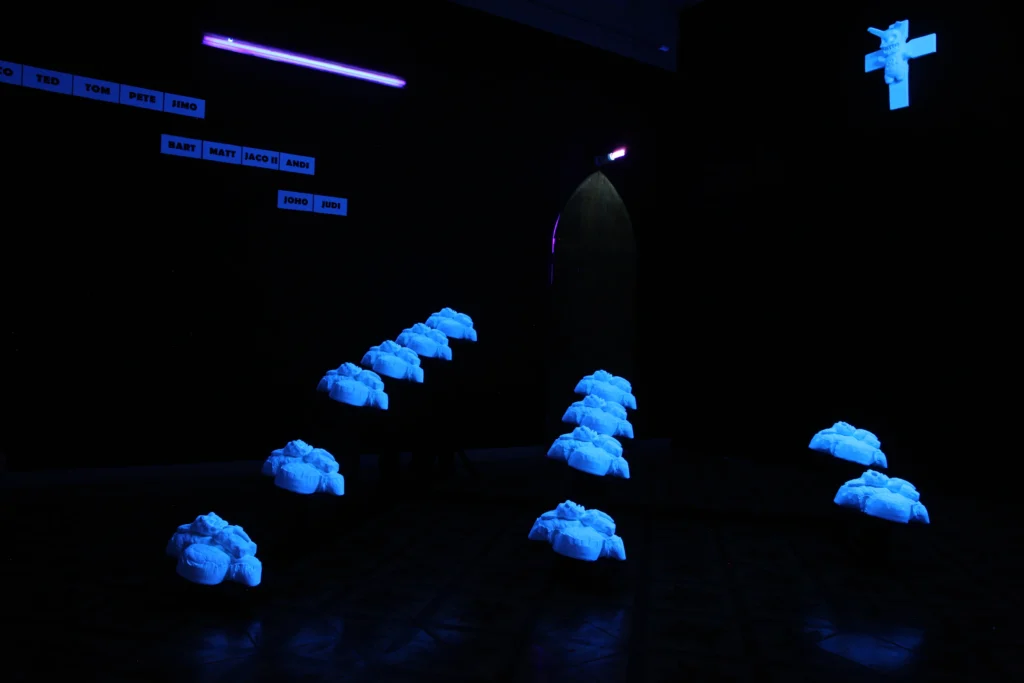
To honor the pagan roots of this holiday, F.A.C. decided to replace the figure of Christ on the cross with a screaming, frenzied, wild bunny. In front of the bunny, installed at the center of the room wall, stands an amphitheater with 12 seats for another 12 bunnies, each riding and towering over 12 blessed and revered Easter doves. Engraved on each dove, like a scroll, is the symbol of one of the 12 apostles.
Room 2 “Bunny 2.42”
Entering the room, one feels as if the bunnies are watching the end of their master, almost immobile, unable to do anything, as if watching a commercial during a film and unable to rise from the couch. It is comfortable to remain seated, waiting for the end, hiding behind the conviction that religion will come and save us all.
The screaming bunny wants to remind us that it is fine to watch and understand the stories being told, but we must act, scream, and kick if we want to achieve our goals. Hope for the future lies in everything we create day by day with our hands and effort, in the bridge to tomorrow that we build daily with our actions, brick by brick, hoping that when we can no longer continue, someone will carry on our work. Finally, they have understood “that they got fished with broken promises.”
Carrara 2019